Supreme Court Allows Border Wall Construction to Resume in Big Bend


Posted on 11/10/26 at 13:30
On Monday, November 9, 2026, the U.S. Supreme Court gave the Trump administration the green light to resume construction of the border wall in Big Bend and other projects in that region of western Texas. The vote was 8 to 1. What does this mean and who is affected? Let’s break it down.
What did the Court decide exactly?
It was a brief, unsigned opinion in the case of Mullin v. Friends of the Ruidosa Church (26A560). According to SCOTUSblog and NBC, only Justice Ketanji Brown Jackson indicated, without explaining why, that she would have denied the government’s petition.
The Court suspended, or put on hold, the preliminary order of U.S. District Judge Kathleen Cardone of El Paso. On October 2, Cardone had halted exemptions and «any construction or activity that alters the terrain» in the Big Bend Sector of the Border Patrol. As we reported when the government took the case to the Supreme Court in October, this judicial battle had been growing.
Pay attention to this detail: according to SCOTUSblog, the Court did not overturn Cardone’s ruling. It only suspended it, so the lawsuit continues.
And why? According to the opinion, a 1996 law (Section 102 of the IIRIRA law) allows the Secretary of Homeland Security to «waive all legal requirements» to build barriers and roads quickly in «high illegal entry areas.» This law only allows lawsuits for constitutional violations. The plaintiffs argued that the secretary exceeded his authority, an argument known as the «major questions» doctrine. The Court responded: «There is no such thing as a ‘constitutional’ claim of major questions,» and said that the government «is very likely to win» that point.
What is being built and where?
According to the government, it would be approximately 341 miles of construction in the sector, which includes Big Bend National Park (NBC). Engineering News-Record reports five federal contracts worth around $7.5 billion. The contract for the park, worth $1.72 billion and awarded to Southwest Valley, covers 17 miles of non-continuous vehicle barriers and approximately 205 miles of patrol roads.
Pay attention to this: according to the Los Angeles Times, U.S. Customs and Border Protection (CBP) said it does not plan to build a wall within the park, but rather patrol roads and vehicle barriers. In September, 30-foot steel panels were already being erected in a 47-mile stretch in Hudspeth County (ENR). The goal, according to NBC, is a facility of around 2,000 miles with panels, vehicle barriers, and surveillance technology.
To move forward, there were three exemptions: one by former Secretary Kristi Noem (February) and two by her successor, Markwayne Mullin (May and July). According to NBC, they set aside dozens of environmental and conservation laws.
Who wins and who loses?
The government and those seeking more border control. James Percival, general counsel for the Department of Homeland Security, wrote on X: «When we went to the Supreme Court, I said that the district court’s order stopping wall construction was ‘as unprecedented as it was flawed.’ We just won 8-1.» The government says that 89,000 people have been detained in recent years trying to cross through that area (NBC via Telemundo). And according to the opinion, Cardone’s order prevented progress on «urgent» security and border integrity interests. Republicans in Congress approved $46 billion for the wall (AP).
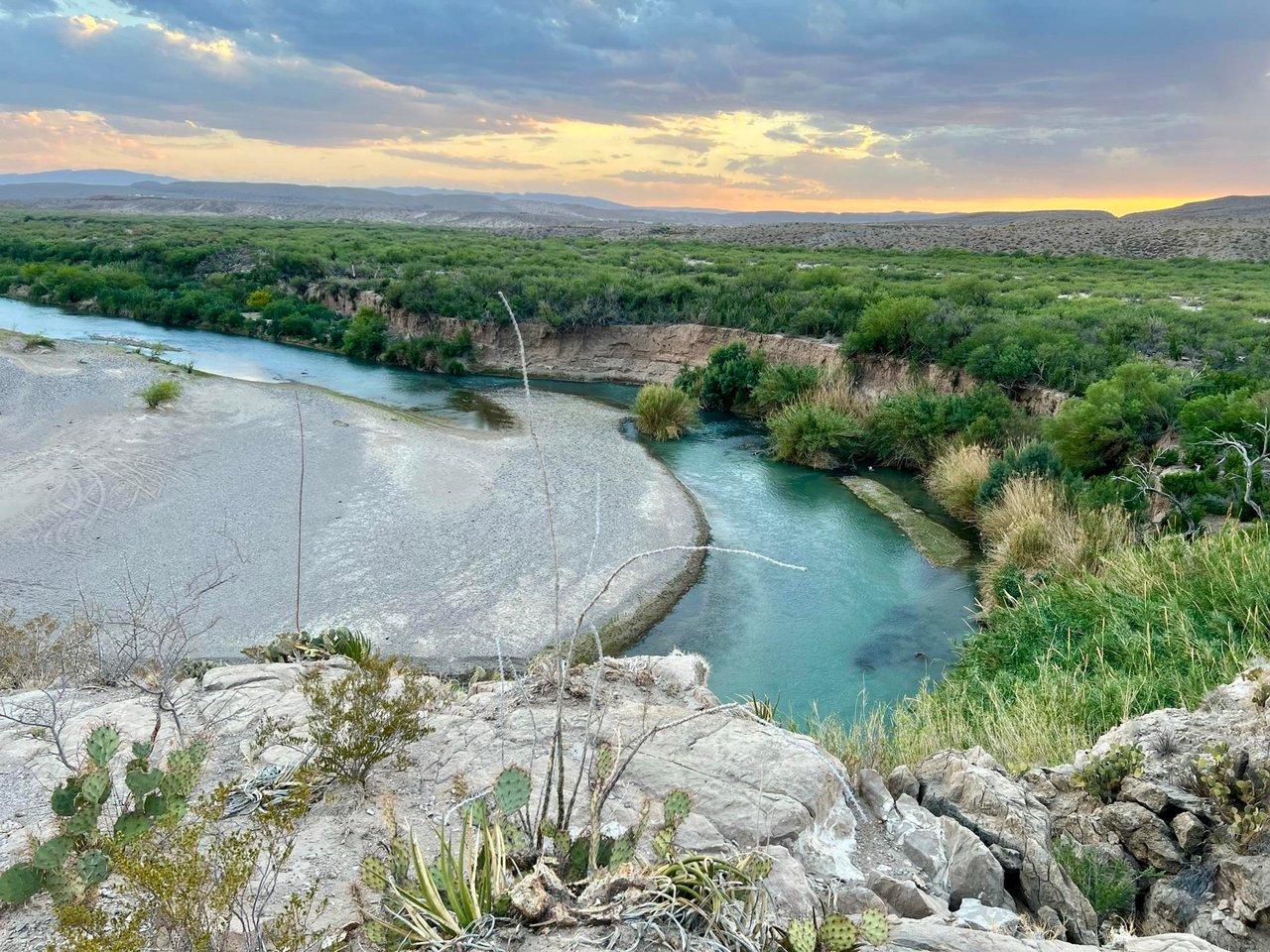
Neighbors, guides, and landowners. According to the Texas Tribune, since January 2026, there has been neighborhood opposition in the region, coming from both parties. Among the plaintiffs is Danny Miller, a Rio Grande river guide and property owner in Redford, who could lose his land. Amigos de la Iglesia de Ruidosa, which restores a historic church in Presidio County, also sued. Big Bend has over 324,000 hectares of protected land (around 800,000 acres), with threatened species, archaeological sites, and landscapes like Santa Elena Canyon (Clarín; AFP).
Environmentalists. Laiken Jordahl, of the Center for Biological Diversity, said: «This terrible decision paves the way for contractors to bulldoze intact desert and dynamite canyon walls before the courts have decided whether this destruction is legal.» The Court, on the other hand, wrote that «the government’s interest outweighs any aesthetic, recreational, and environmental harm» alleged by the plaintiffs.
Taxpayers. Here are the numbers. The sector’s contracts total around $7.5 billion (ENR), and the government claims that the pause was costing nearly half a million dollars a day. Ask yourself: do you think it’s a justified investment or excessive spending? That decision is yours.
What’s next?
The suspension lasts while the government asks the Supreme Court to review the case. Meanwhile, the lawsuit continues in the courts, and there is still no final decision on whether the exemptions and construction were legal.
What do you think?
Maybe you live far from Texas and feel that this doesn’t affect you. But the underlying debate is the same across the country: how far can a government go to accelerate a security project, and how much do landscape, property, and nature weigh against that urgency?
If you want to see how the wall has played out in another state, read what happened in Arizona: Arizona to close public areas due to border wall. Compare the arguments on each side, review the figures, and draw your own conclusions.
Sources: U.S. Supreme Court, Mullin v. Friends of the Ruidosa Church; SCOTUSblog; NBC News; NPR; Los Angeles Times; Engineering News-Record; AP. Data consulted on November 10, 2026.
Main photo: EFE/Laiken Jordahl/Center for Biological Diversity