García Harfuch and DEA Director Meet: What Was Said and What Wasn’t


Posted on 11/10/26 at 11:30
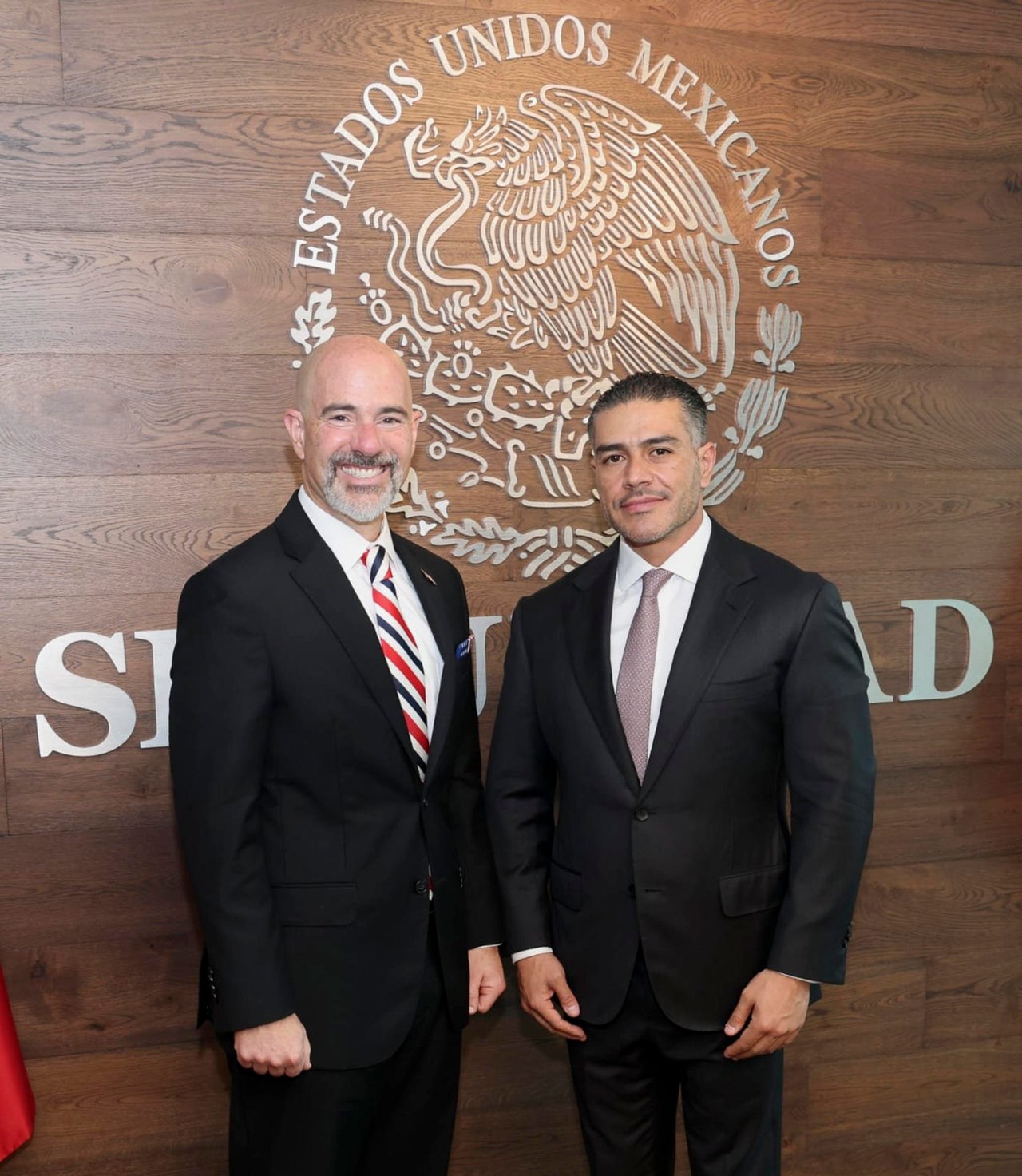
If you follow security news between Mexico and the United States, this is of interest to you. Mexico’s Secretary of Security, Omar García Harfuch, reported on Monday, November 9, that he met with DEA Director Terrance Cole. Here’s what is known and what isn’t about this meeting, according to EFE.
What Happened Exactly?
According to García Harfuch, the meeting had been scheduled since late October. They discussed the capture of crime leaders wanted by both countries and the exchange of information and intelligence on illicit networks. They also reviewed pending collaboration and extradition requests. Additionally, they touched on the trafficking of arms into Mexico and the trafficking of drugs into the U.S.
The official wrote: “We agreed on the importance of strengthening investigations against criminal networks that generate violence”. The DEA, cited by Político MX, said the meeting was “to hold productive discussions about our shared efforts to dismantle narco-terrorist organizations and confront the corruption that allows them”.
Were there any agreements? None were announced. According to EFE, García Harfuch also didn’t provide details on extradition cases or detentions resulting from the meeting, nor did he say when or where it took place.
What’s the Context Behind This?
On Sunday, November 8, the capture of Rafael Álvarez Ayala, alias “R2”, was announced. He is allegedly a leader of the Jalisco New Generation Cartel (CJNG) and is wanted by the U.S. He was detained in Zapopan, Jalisco, along with 19 other people, in an operation that used intelligence from the DEA, according to EFE and Político MX.
On the same Monday, García Harfuch was in Sinaloa, which has been experiencing a violence crisis for two years due to a dispute between factions of the Sinaloa Cartel, according to EFE. And between February 2025 and January 2026, Mexico made three massive transfers of people wanted by Washington: 92 in total, according to official data cited by EFE.
Who Gains and Who Is Concerned?
Families in violent areas of Mexico. More captures of crime leaders may mean more pressure on those who generate violence, and that’s what the government is looking for when talking about strengthening investigations. The question that remains is whether these detentions will bring calm or new rearrangements among criminal groups. Available data does not allow us to answer this yet.
The Mexican government. It can present results, such as the capture of “R2”. But it also has to tread delicate ground: García Harfuch said that cooperation is based on respect for sovereignty, shared responsibility, and “cooperation without subordination”, and that security actions in Mexican territory correspond “exclusively” to Mexican authorities.
The United States. Its interest, according to what was discussed in the meeting, lies in stopping the trafficking of drugs into its territory and capturing people wanted by its justice system. The DEA spoke of dismantling organizations and confronting the corruption that allows them.
Mexican communities in the U.S. Many have relatives in states affected by violence. For them, what matters is not the rhetoric, but whether something changes in the daily life of their towns. For now, there are no concrete announcements indicating this.
How Does This Affect You?
Perhaps you have family in Jalisco, in Sinaloa, or in another state where violence is part of the routine. Ask yourself what would change for them if what was discussed comes to fruition. And look at what’s missing: agreements, cases, and dates. That’s what will give the real measure of this meeting.
If you want to keep investigating, look at another capture with cooperation between both countries and read about the controversy over CIA agents in Mexico. These help to see why the issue of sovereignty weighs so heavily in this relationship.
Sources: EFE via Infobae; Político MX; Reforma via El Diario. Data consulted on November 10, 2026.
Main photo: EFE/@DEAHQ