Trump Faces Lawsuit Over Charging for Priority Access to His Posts on Truth Social



Posted on 08/12/26 at 23:30
- Lawsuit Against Trump Over Truth Social
- Subscription Reaches $100,000 Monthly
- Alleging Unequal Official Access
Donald Trump is facing a new legal battle over a Truth Social service that allows institutional clients to pay up to $100,000 a month to receive posts from influential accounts, including the president’s own, more quickly.
The lawsuit was filed this Wednesday in a New York federal court by The Intercept and Freedom of the Press Foundation, with support from organizations linked to press freedom and civil rights.
- Why it Matters: The plaintiffs argue that the system could create two speeds for accessing presidential information: one for those who can pay to receive it sooner and another for journalists and citizens who rely on regular access.
The conflict puts under scrutiny the relationship between Trump’s official communications and a platform owned by Trump Media, especially since the president frequently uses his account to disseminate government-related information.
Truth API Puts Access to Trump’s Messages Under the Microscope
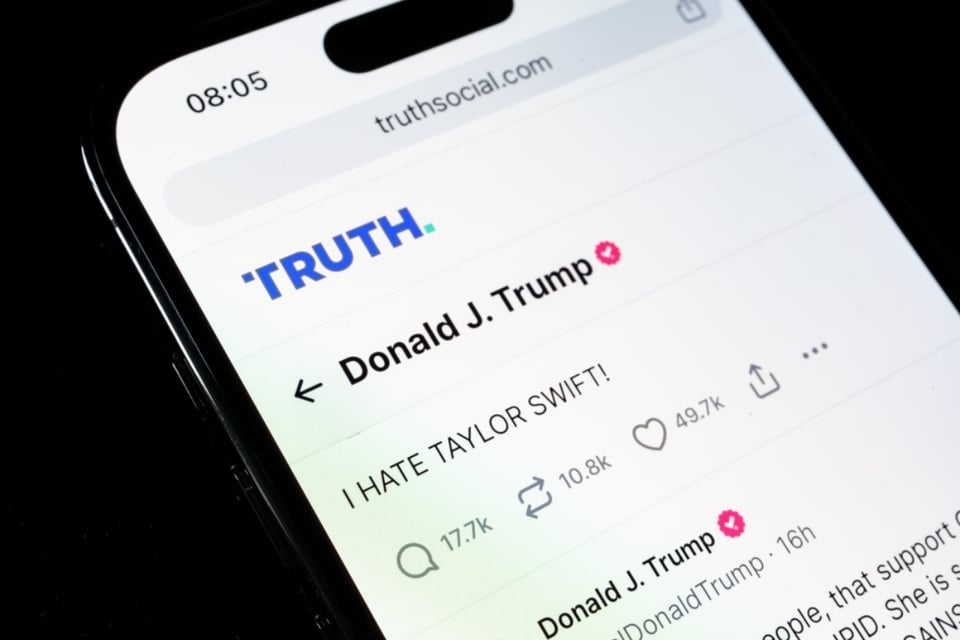
- Key Points: Truth API began being offered on August 1 and is aimed at institutional clients interested in obtaining posts from the ten most influential accounts on Truth Social more quickly.
The service can reach a price of $100,000 per month, and Trump’s account heads the included group, a feature that now constitutes a central part of the controversy presented to the court.
YOU MAY BE INTERESTED: U.S. to Issue Commemorative Passports with a Trump Image Starting in August
- The Fact: Trump Media reported that Truth API already has ten clients and expects the product to generate recurring revenue for the company.
The plaintiffs argue that offering preferential access to presidential messages through a paid service could violate the rights of journalists and citizens protected by the First Amendment.
Lawsuit Against Trump Targets the First and Fifth Amendments
- The Process: The lawsuit seeks to prevent Trump and White House employees from developing what the plaintiffs describe as an unconstitutional scheme to monetize presidential posts made through Truth Social.
The lawsuit also invokes the Fifth Amendment under the argument that the government cannot impose unreasonable conditions on access to government benefits.
Seth Stern, director of activism at Freedom of the Press Foundation, questioned how a president can sell priority access to the news he generates to benefit a private company under his control.
The arguments, however, will have to be examined by the court: the filing of the lawsuit does not mean that the justice system has determined that Truth API violates the Constitution.
Trump Media Faces Losses While Betting on Truth API
The financial figures add another element to the case. Trump Media reported losses of $238.1 million during the second quarter of 2026, ten times those registered in the same period the previous year.
At the same time, the company almost doubled its revenue to reach $1.7 million and presented Truth API as a product with potential to generate recurring revenue.
- What They Can Do: Journalists and users can continue to follow publicly available posts on Truth Social while the court analyzes whether the early access mode should face restrictions.
The controversy specifically focuses on the temporary advantage that those who pay for Truth API would receive when posts contain information related to government decisions or matters.
The Limit of the Lawsuit
- The Limit: The case presents accusations from the plaintiffs, not judicial conclusions. It will be up to the federal court to determine if the service constitutes a constitutional violation and what measures, if any, are warranted.
The dispute thus opens a broader question: how far can a private company go in charging for early access to a president’s messages when those posts also function as a channel for communicating government information, noted ‘EFE’ and ‘BBC‘.