Northeast Nor’easter Leaves One Dead in New York as Flooding and Outages Continue


Posted on 09/28/26 at 12:13
- Northeast nor’easter leaves one dead
- More than 100,000 lose power at peak
- Hundreds of flights canceled
A powerful coastal storm continued to affect the Northeast U.S. on Sunday, September 27, after bringing heavy rain, strong winds, flooding, and power outages from New Jersey and New York to New England.
The storm left at least one person dead in New York, while more than 100,000 homes and businesses lost power at the height of the outages over the weekend and coastal communities remained under threat from additional high tides.
The slow-moving system prolonged its effects across the region, exposing millions of people to rain, strong gusts, fallen trees, dangerous surf, and flooding before conditions gradually began to improve.
New York and New Jersey had previously declared states of emergency in areas expected to be hit hardest, while Connecticut activated its Emergency Operations Center as the storm’s effects were expected to continue into Monday.
Northeast Nor’easter in New York Leaves One Dead and Four Injured
#ÚltimaHora | The nor’easter storm is hitting the Northeast of the country, where it has caused at least one death and left tens of thousands of users without electricity, according to local media. https://t.co/EUl4qgsJOP
— N+ UNIVISION (@nmasunivision) September 27, 2026
Tragedy struck Brooklyn on Saturday when a tree fell on Leighton Brown, 56, a New York City Housing Authority (NYCHA) employee, while he was at Cypress Hills Houses in East New York, according to local authorities.
Brown was taken to Brookdale Hospital, where he was pronounced dead. New York City Mayor Zohran Mamdani later publicly identified him and mourned the death of the city worker.
In another incident involving a fallen tree, four people were injured at a children’s park in Brooklyn, while city crews worked extended shifts responding to downed trees and other storm-related hazards.
The threat also extended to Long Island, where marine conditions became especially dangerous and authorities continued warning about high surf, rip currents, and coastal flooding.
More Than 100,000 Customers Lost Power at Peak
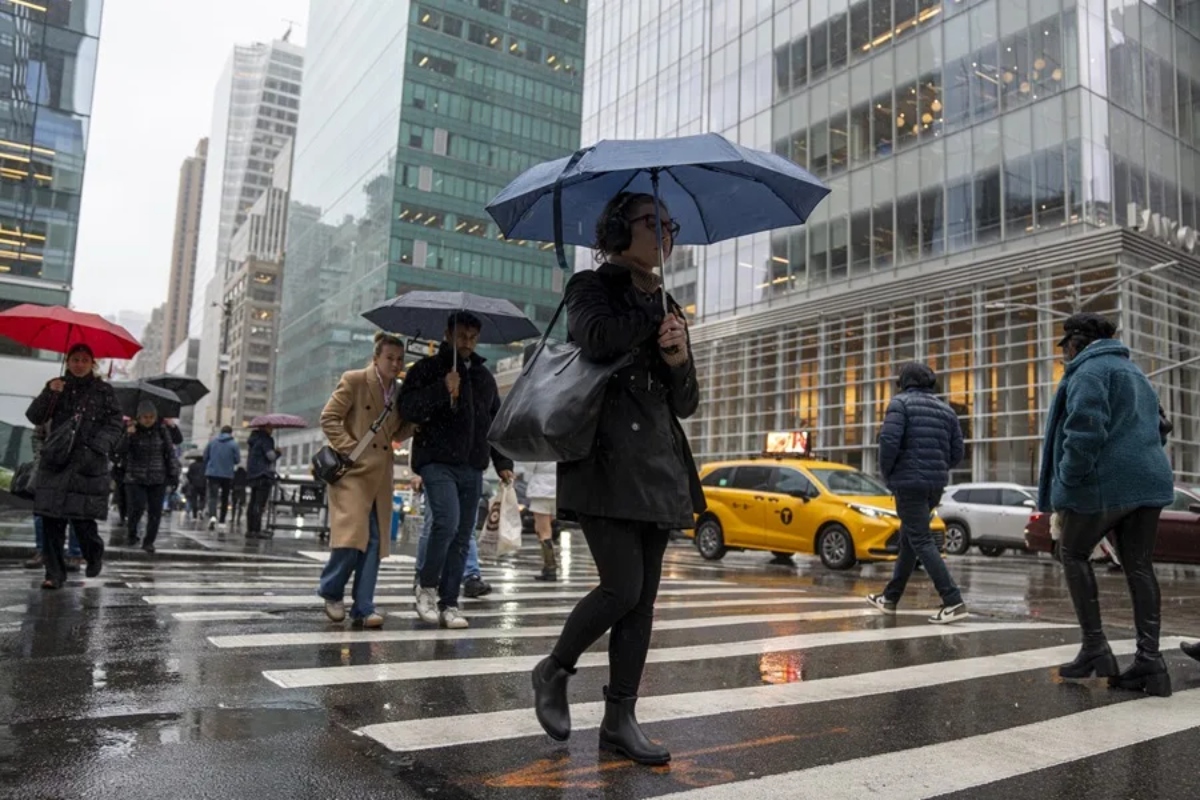
Power outages became another major impact: more than 100,000 homes and businesses across the Northeast and Mid-Atlantic lost electricity at one point during the storm, while tens of thousands remained without power as restoration work continued.
New York and Connecticut each reported tens of thousands of outages during the weekend, while New Jersey, Massachusetts, Rhode Island, and Pennsylvania also recorded significant disruptions.
Strong winds, fallen trees, and flooding complicated repair efforts; in New Jersey, PSE&G said it mobilized approximately 2,500 workers to respond to damage and restore power.
YOU MAY BE INTERESTED: Powerful New England Nor’easter Threatens Damaging Winds, Flooding and Outages
The situation continued to change through Sunday as utilities restored service while additional wind and flooding threatened to cause new outages.
Flights Canceled and Flooding Complicate Northeast U.S.
The storm also disrupted air travel: hundreds of flights were canceled over the weekend, with Boston Logan International Airport among the hardest-hit airports as travelers faced delays and itinerary changes.
More than 400 flights involving U.S. airports were canceled on Saturday, and disruptions continued Sunday. At Boston Logan alone, more than 300 flights had been canceled by Sunday afternoon.
Coastal flooding remained another concern as the slow-moving system lingered near Long Island and New Jersey, with additional high tides threatening vulnerable waterfront communities.
SOURCES: EFE, eluniverso