Markets Sound Alarm: Rates Hit 24-Year High


Posted on 10/08/26 at 12:00
The yield on the 10-year US Treasury bond rose to 5.35% on Wednesday, October 7, 2026, according to CNBC, its highest level since 2002. Investors in the US, France, and the UK are selling bonds due to fears of inflation and rising energy costs.
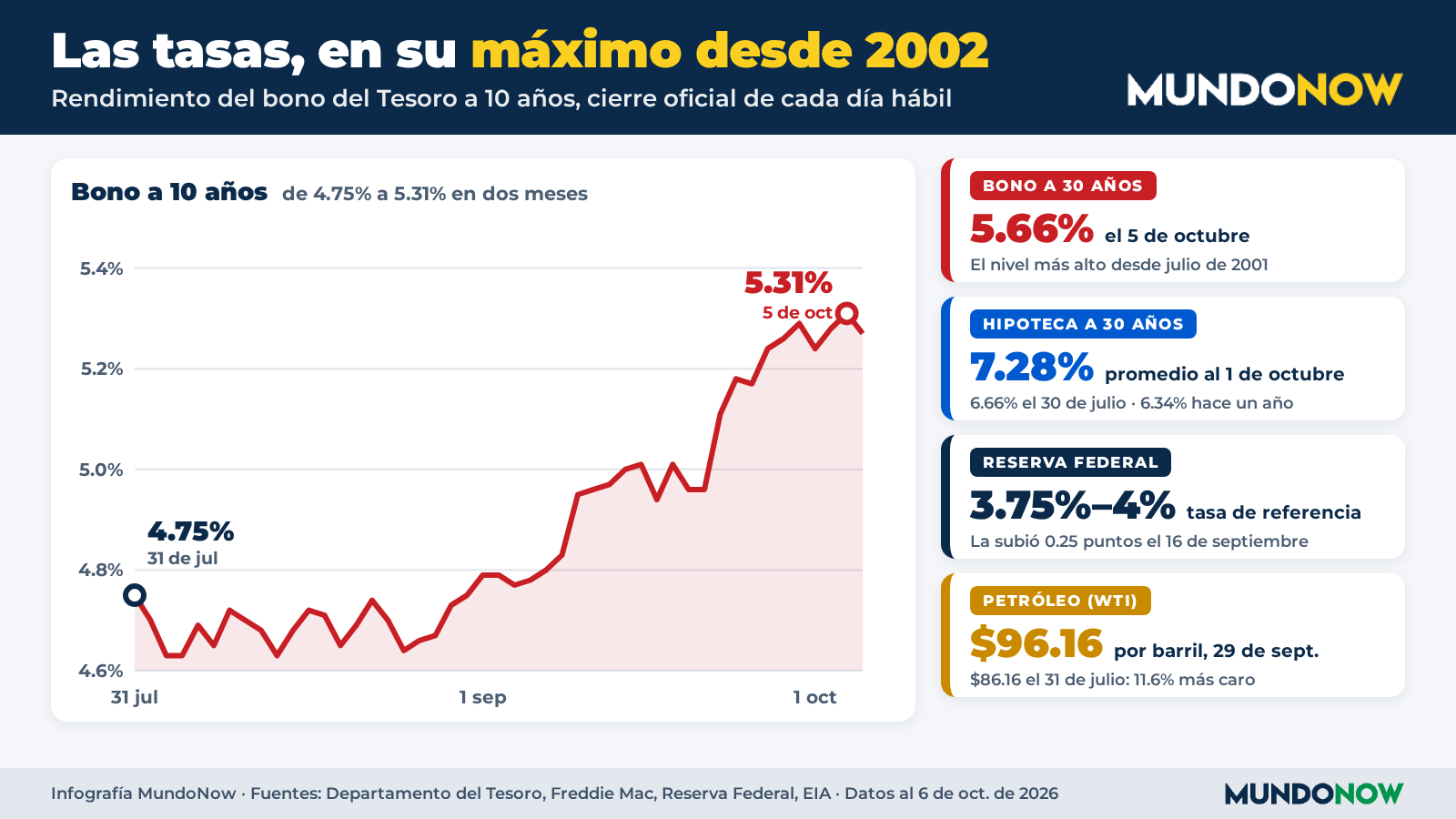
- The official close of the Treasury Department on Monday, October 5, was 5.31%, the highest since May 2002. On July 31, it was at 4.75%.
- The 30-year bond closed at 5.66% on the same Monday, its highest level since July 2001. This Wednesday, it rose to 5.724%, according to CNBC.
- In the auction on Wednesday, the Treasury sold $39 billion in 10-year bonds with a yield of 5.300%, compared to 4.834% in September. At 1 p.m. ET, the Dow Jones fell 0.71% and the S&P 500 fell 0.34%.
Why it matters: when investors around the world sell bonds at the same time, it’s a sign that they expect tough times. And these rates are the basis for what you pay for your mortgage, car loan, or credit card.
Why investors are selling
When the price of a bond falls, its yield rises. Bonds have lost value for two main reasons:
- Inflation: investors fear that prices will continue to rise. The Federal Reserve (Fed) said in its latest statement that inflation remains «elevated».
- Energy: the US reference oil price (WTI) closed at $96.16 per barrel on September 29, the latest data from the Energy Information Administration (EIA). On July 31, it was at $86.16, so it rose 11.6%. CNBC calculates that the increase has already reached 20% since late July.
When oil prices rise, almost everything else rises, from gasoline to food that arrives at the supermarket by truck. This week, gasoline prices fell slightly, but remain high: check prices in your state.
The pressure is also being felt outside the US. On Wednesday, the yield on the 10-year French bond rose to 4.876% and the 10-year British bond to 5.447%, according to CNBC.
How it affects you: credit becomes more expensive
The yield on Treasury bonds is the reference for almost all loans in the country. When it rises, mortgages, private student loans, credit cards, and business financing become more expensive.
- Mortgages: the average 30-year rate reached 7.28% on October 1, according to Freddie Mac. On July 30, it was 6.66%, and a year ago, it was 6.34%.
- Federal Reserve: on September 16, the Fed raised its reference rate by 0.25 points, to a range of 3.75% to 4%. This rate drives the rates of credit cards and other variable loans.
What the Treasury is doing this week
The Treasury Department has a busy week of auctions, in which it sells new bonds to investors:
- Tuesday, October 6: sold $58 billion in 3-year bonds with a yield of 4.932%.
- Wednesday, October 7: sold $39 billion in 10-year bonds, the most closely watched auction, with a yield of 5.300% (details below).
- Thursday, October 8: auction of $22 billion in 30-year bonds.
- Thursday, October 8: the Treasury will also repurchase bonds with 20 to 30 years remaining by at least $4 billion, double the usual amount, to provide more liquidity to that market, according to CNBC. The previous repurchase in that range, on September 24, was $4.078 billion. Those in July and August were $2 billion.
«The 10-year bond offer is much more relevant to setting the tone for rates in the US,» wrote Ian Lyngen, head of US rate strategy at BMO, in a note at the close of Tuesday. Lyngen said the 3-year auction had a good reception, but the real test is the 10-year auction.
Result of the 10-year auction
The Treasury released the results at 1 p.m. ET on Wednesday, October 7:
- Yield: 5.300%. In the September auction (September 9), it was 4.834%, and in the August auction (August 12), it was 4.683%.
- Demand: investors offered around $109 billion, 2.77 times what was being sold. In September, the ratio was 2.71.
- Who bought: indirect buyers, a group that includes foreign investors and central banks, took 80.3% of the competitive bids accepted. Direct buyers took 17.1%.
- Primary dealers: the so-called primary dealers, who buy what no one else wants, only took 2.5%, compared to 4.3% in September. A low figure usually indicates good demand.
In other words, there were buyers, but only in exchange for a much higher yield than a month ago.
How Wall Street reacted
At 1 p.m. ET, when the results were released, stocks fell, according to Yahoo Finance data:
- Dow Jones: 51,157.82 points, a drop of 363.46 points (-0.71%).
- S&P 500: 7,792.08 points, a drop of 26.85 points (-0.34%).
High rates weigh on stocks because they make corporate credit more expensive and make bonds more attractive than the stock market.
What analysts are looking for in the Fed minutes
The Fed will release the minutes of its September 15-16 meeting on Wednesday, October 7, at 2 p.m. ET. Investors will review them to understand how the Fed views inflation and whether it plans to raise rates again. The next meeting is on October 27-28.
What you can do
- Don’t panic, but prepare: markets move in cycles. The important thing is to review your personal situation.
- If you have variable-rate debt (credit cards, some lines of credit): paying them off or switching to a fixed rate can protect you if rates continue to rise.
- If you’re planning to buy a house or car: compare offers from several lenders before committing. A few tenths of a percentage point difference in the rate can add up to thousands of dollars.
- If you have savings: high-yield savings accounts and certificates of deposit (CDs) pay more when rates rise.
- Stay informed: the Fed’s decisions directly affect what you pay for your loans.
What’s next
The 30-year bond auction on Thursday and the Fed minutes, which will be released on Wednesday at 2 p.m. ET, will provide more clues about whether yields will continue to rise. For now, the US and European bond markets are sending a warning: the era of cheap money is over.
For families planning big purchases or with debt, understanding these signals can make a difference between a smart decision and a costly one. MundoNow will closely follow the Fed’s decisions and their impact on your wallet.
Sources: Treasury Department, daily bond yields; TreasuryDirect, auctions; TreasuryDirect, results of the October 7, 2026, 10-year auction; Federal Reserve, September 16, 2026, statement; Federal Reserve, FOMC calendar; Freddie Mac, mortgage rates; EIA, WTI oil price; CNBC (October 7, 2026); Yahoo Finance, Dow Jones and S&P 500.