Sanctions on the International Criminal Court: The Law Must Apply Equally


Posted on 10/11/26 at 20:41
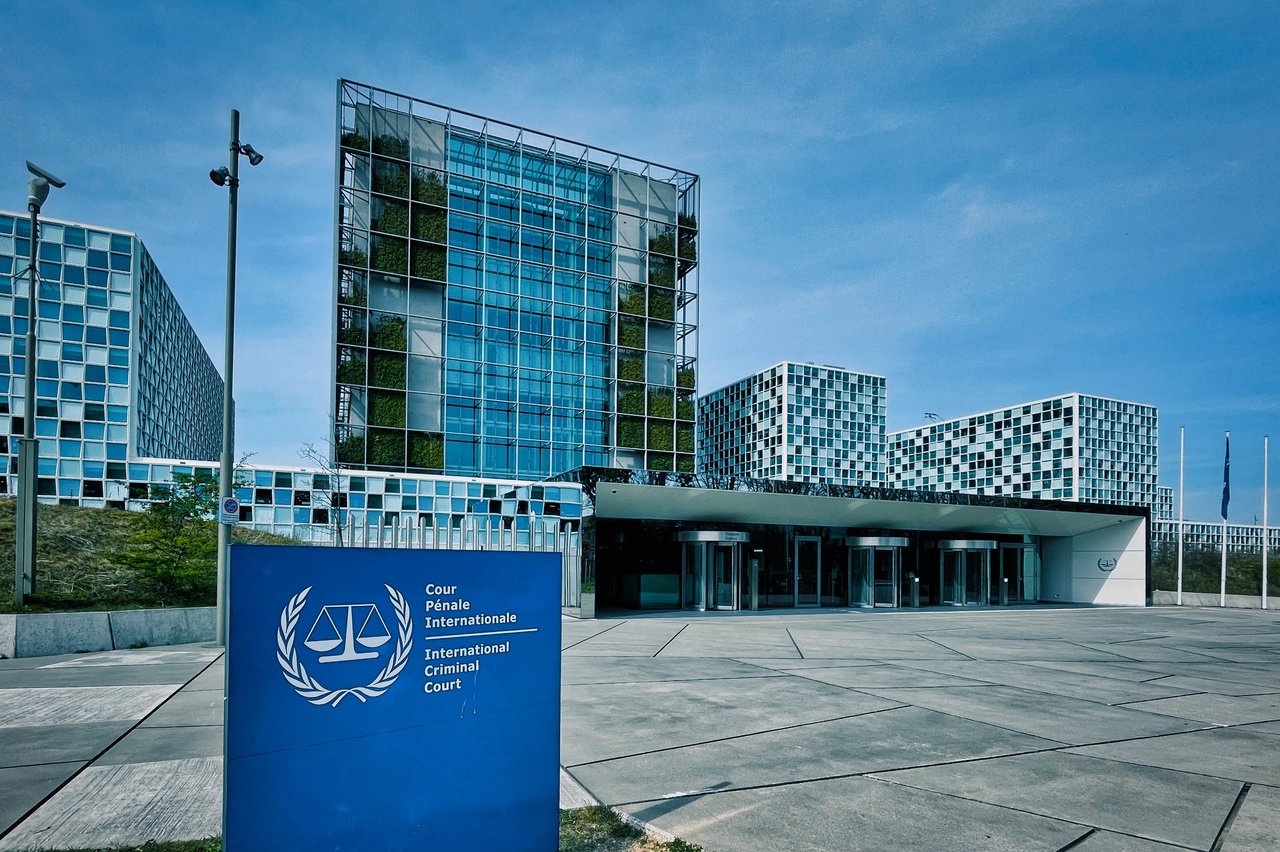
The sanctions on the International Criminal Court announced by the United States on Friday, October 9, put to the test a simple idea: the law applies equally whether it favors us or inconveniences us. If a country applies the law only when it is convenient, it ceases to be a rule-of-law state and becomes a tool of power.
- The State Department included the International Criminal Court (ICC), based in The Hague, in its list of financial sanctions. Until now, it had only sanctioned judges and prosecutors.
- The United Kingdom, France, Germany, Italy, the Netherlands, Denmark, Canada, and Japan rejected the measure in a joint statement.
- The European Union’s foreign ministers will discuss on Monday, October 12, how to protect the Court.
Why it matters: the ICC tries genocide, war crimes, and crimes against humanity when countries cannot or do not want to do so. It has 125 member countries, including most of Latin America. Additionally, it has an ongoing investigation into the repression in Venezuela, a case closely followed by the Venezuelan community in the United States.
What Washington Decided
«President Trump will never allow the International Criminal Court to prosecute Americans,» said Secretary of State Marco Rubio when announcing the measure. «Either the ICC ends its threats, or we will end the ICC.» The State Department added that it expects its allies who are part of the Court, «many of whom depend on the US military for their defense,» to stop it.
The designation, based on Executive Order 14203 signed in February 2025, prohibits US individuals and companies from doing business with the Court. This affects payments in dollars, banks, and technology services. However, the Treasury Department granted a margin: a general license permits payment of salaries, rents, medical insurance, and member-country fees until April 7, 2027. Washington says that the deadline is for negotiation.
The United States and Israel never ratified the Rome Statute, the treaty that created the Court, and argue that it has no authority over their citizens. The Court responds that it can investigate crimes committed on the territory of its member states, regardless of the accused’s nationality. On that basis, it issued arrest warrants against Israeli Prime Minister Benjamin Netanyahu and his former Defense Minister Yoav Gallant for the war in Gaza.
When Washington Accuses and Punishes on Its Own
But the United States does not reject the idea of pointing out foreign leaders as criminals. It does so frequently, just without an independent court in between: the same government accuses, decides, and in some cases uses that accusation to justify military actions.
- Iran: Washington considers it a state sponsor of terrorism since 1984 and in 2019 designated the Revolutionary Guard as a foreign terrorist organization, the first time it applied that label to another country’s armed force. In June 2025, it bombed three Iranian nuclear facilities. On February 28, 2026, the United States and Israel launched an offensive in which Supreme Leader Ali Khamenei died. Trump said the goal was to «eliminate imminent threats from the Iranian regime.» Congress approved resolutions questioning the lack of authorization for that war, but the president vetoed them.
- Venezuela: the US justice system accused Nicolás Maduro of narcoterrorism in 2020. In November 2025, the State Department designated the Cartel de los Soles as a terrorist organization, which it describes as headed by Maduro. Since September 2025, the US military has attacked at least 68 boats that, according to the government, were carrying drugs, with at least 223 dead. A UN special rapporteur described those attacks as «extrajudicial executions.» On January 3, 2026, a military operation captured Maduro in Caracas and took him to New York, where he pleaded not guilty.
None of this makes the rulers of Tehran or Chavismo innocent, who repressed their own people for years. The point is another: when a single country is both prosecutor and judge, and also has the most powerful army in the world, its accusations do not pass through any independent filter before becoming bombs.
The Dollar as a Political Weapon
There is another, less visible conflict of interest. The sanctions against the Court work because the dollar is the world’s currency: it is used in 89% of foreign exchange transactions, according to the Bank for International Settlements, and accounts for 56.7% of central banks’ reserves, according to the International Monetary Fund. Almost any bank in the world needs access to the US financial system, so it obeys Washington’s sanctions lists even if it has nothing to do with the United States.
The effects were already seen with the sanctions against Court officials in 2025. British citizen and ICC prosecutor Karim Khan had his bank accounts closed in the United Kingdom, and Microsoft canceled his ICC email account, according to the AP. A Canadian judge reported that she immediately lost her credit cards.
The world trusts the dollar and the US financial system as a common, almost neutral infrastructure, just as it trusts the rules of trade or air transport. When the country administering that infrastructure uses it to pressure a court investigating its allies, it conflates its role as arbiter with that of an interested party. And it gives other countries another reason to seek alternatives to the dollar.
Why Europe Is Right to Defend a Court
That is why it is legitimate for Europe, along with Latin America and much of the world, to have created and want to sustain a permanent court. In The Hague, accusations are presented by a prosecution, reviewed by judges from different countries, the defense has lawyers, evidence is discussed in court, and there is an appeal. It is a slow and imperfect process, but it is a process. For example, the ICC subjected former Philippine President Rodrigo Duterte to a medical evaluation before deciding that he could be tried.
Washington knows this. In March 2023, when the ICC issued an arrest warrant against Russian President Vladimir Putin for the deportation of Ukrainian children, then-President Joe Biden said the decision was «justified.» Russia is not a member of the Court, and the argument of jurisdiction did not seem to be a problem in that case.
The same applies to Venezuela. In July 2026, interim president Delcy Rodríguez notified the country’s withdrawal from the Rome Statute, and the State Department celebrated the decision. But the ICC has been investigating possible crimes against humanity committed during the repression of protests since 2017, and the withdrawal does not stop ongoing investigations. For Venezuelan victims, that court is one of the few avenues left.
Europe Also Has a Pending Task
Consistency is also demanded of Europe. In January 2025, Italy arrested Libyan Osama Elmasry Njeem, wanted by the ICC, in Turin, and two days later returned him to Libya; the Court declared that Italy failed to fulfill its obligations. In April 2025, then-Hungarian Prime Minister Viktor Orbán received Netanyahu despite the arrest warrant and announced his country’s withdrawal, a decision that the government of Péter Magyar reversed in May 2026.
Now, European governments promise to defend the Court. «We regret and strongly disagree» with the sanctions, wrote eight foreign ministers. «We will do what is necessary to defend the ICC,» said Dutch Prime Minister Rob Jetten. Belgian Foreign Minister Maxime Prévot asked to activate the EU’s blocking statute, a 1996 law that prohibits European companies from complying with certain foreign sanctions. But statements do not pay salaries: Europe will have to say which bank will process the Court’s payments after April 2027.
The Test of Difficult Times
«History will judge this moment,» the Court responded in a statement. The announcement came on the same day that former ICC judge Navi Pillay of South Africa received the Nobel Peace Prize.
A system of justice that is respected only when it accuses the enemy does not protect anyone. This is known by millions of Latinos who arrived in the United States fleeing countries where courts served the power of the day, and where the government decided who was a criminal without having to prove it. If Washington can declare foreign leaders guilty and act accordingly, it is reasonable that the rest of the world wants those accusations, from everyone, to pass through independent judges. The rule must apply in good times and bad.
What’s Next
- Monday, October 12: the EU’s foreign ministers discuss the protection of the Court, at Belgium’s request.
- This week: the issue reaches the European Council, where it will be decided whether to activate the blocking statute.
- November 30, 2026: the trial against former Philippine President Rodrigo Duterte begins in The Hague, the first major test of the Court under sanctions.
- April 7, 2027: the license allowing the ICC to pay salaries and cover basic expenses expires unless Washington extends it.
Sources: State Department; Treasury Department (OFAC), general license 13; International Criminal Court; Anadolu; Agence Europe; Congressional Research Service (Iran, 2026); BBC (June 2025 attacks); State Department (Cartel de los Soles); AP (Maduro capture); ABC News (UN report on boat attacks); Bank for International Settlements; IMF (reserves, second quarter 2026); AP (sanctions effects); CNN (Biden on Putin, 2023); State Department (Venezuela, July 2026); Al Jazeera; ICC, decision on Italy; The Guardian (Hungary); ICC (Duterte case). Data consulted on October 11, 2026.