Israel Election Results 2026: Netanyahu Bloc Falls Short, Arab Parties Surge


Posted on 10/28/26 at 06:03
With the highest voter turnout in decades, Israel faces a divided parliament. Arab parties are projected to nearly double their representation, while tensions grow within the right-wing bloc supporting Netanyahu.
Why It Matters
Israel has just held one of its highest-turnout elections in decades. Although Benjamin Netanyahu’s Likud remains the largest individual party, initial exit polls suggest that his coalition will fall short of the parliamentary majority needed to remain in power.
But the most significant shift could come from elsewhere: Israeli Arab parties are projected to nearly double their parliamentary representation, potentially becoming key players in negotiations to form the next government.
The election results could also have implications for the United States, Israel’s main strategic ally, amid ongoing tensions over Gaza, Iran, and the future of the Middle East.
Israel Election Results 2026: The Key Takeaways
- Historic voter turnout: Approximately 77.7% of eligible Israelis voted, the highest turnout in decades, according to the Central Elections Committee.
- Netanyahu falls short of a majority: His bloc is projected to win around 50 seats, below the 61 required to control parliament.
- The opposition also lacks a majority: The bloc led by Gadi Eisenkot is projected to secure approximately 52 seats, according to exit poll summaries published by Haaretz.
- Arab parties make historic gains: The two main Arab parties are projected to win between 16 and 18 seats, compared with 10 in the previous legislature.
- Divisions emerge on the right: While some leaders are considering new alliances, others reject the possibility of a government involving the opposition.
Source: Haaretz, live coverage of Israel’s parliamentary election on October 27, 2026.
Israel Election Results: High Turnout, Deep Political Divisions
Israel held its first national election since the Hamas attacks on October 7, 2023, and the subsequent war in Gaza.
Voter turnout reached approximately 77.7%, nearly seven percentage points higher than in the previous election, according to the Central Elections Committee figures cited by Haaretz.
The figures indicate an unusually high level of electoral participation, although they do not necessarily reflect consensus about Israel’s political future.
An initial exit poll published by public broadcaster Kan 11 projected 25 seats for Netanyahu’s Likud party, followed by 21 for Yashar, the centrist party led by Gadi Eisenkot.
However, under Israel’s parliamentary system, winning the most seats as an individual party does not guarantee the ability to form a government.
The central question is which leader can assemble a coalition of at least 61 lawmakers. So far, the initial projections give neither bloc that majority.
Arab Parties Could Reshape Israel’s Political Landscape
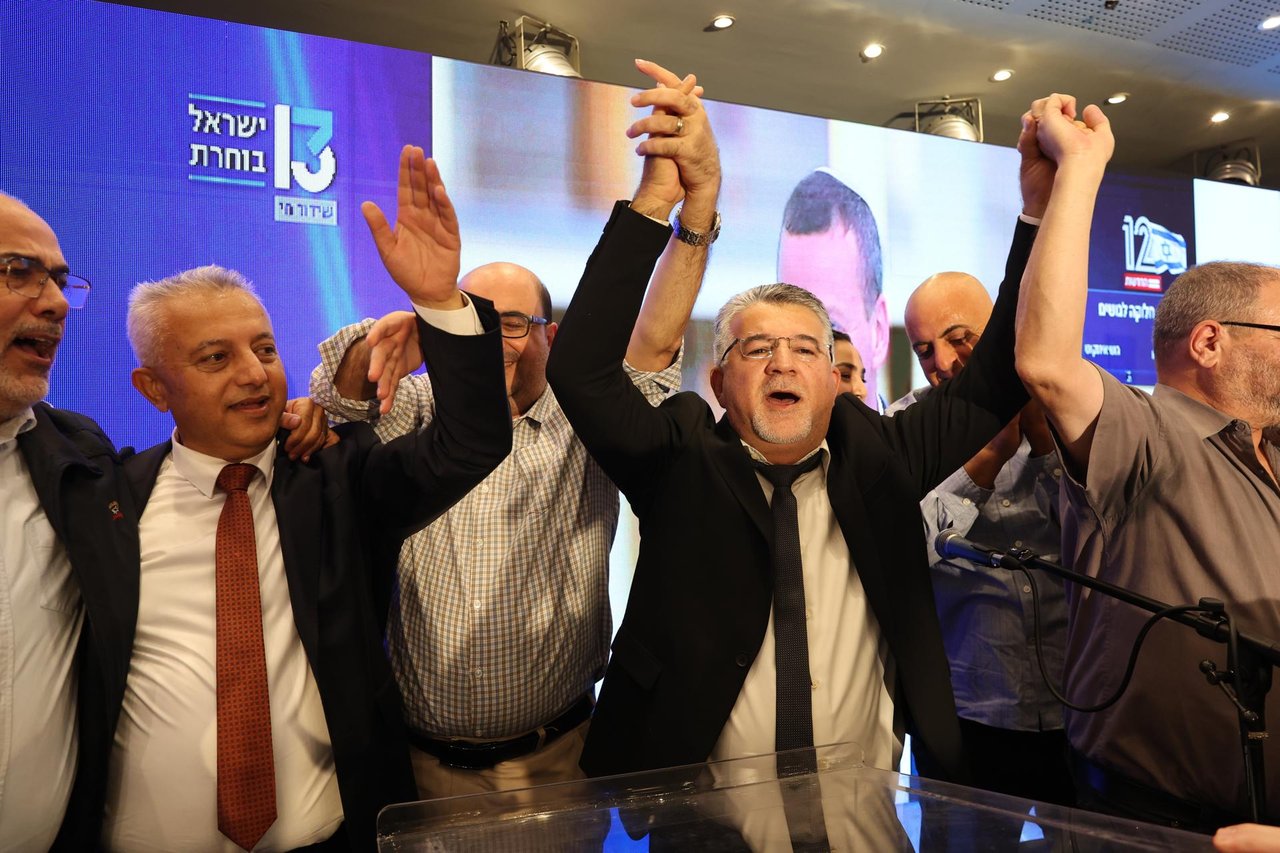
One of the most significant developments in Israel’s 2026 election is the projected surge in support for parties primarily representing Arab citizens of Israel.
According to projections cited in the initial reporting, the Joint List could secure 11 seats, while the United Arab List could win another seven. Together, the two parties would hold 18 seats, nearly double their combined representation of 10 in the outgoing Knesset.
Such a result could give Arab parties considerable influence in negotiations to form the next governing coalition.
Mansour Abbas, leader of the United Arab List, expressed his willingness to help facilitate an alternative government.
Abbas recalled his previous involvement in negotiations with both Netanyahu and the so-called Change Bloc, which eventually succeeded in forming a government.
He expressed hope that the opposition and his party could secure the 61 seats needed to replace Netanyahu as prime minister.
However, significant disagreements remain among opposition parties over whether to rely on the support of Arab lawmakers.
Smotrich Rejects the Political Gains of Arab Parties
Finance Minister Bezalel Smotrich, a prominent figure on Israel’s religious nationalist right, responded to the projections with remarks reflecting these political tensions.
Following the release of the exit polls, Smotrich said his party would not allow Arab citizens to celebrate the results as a political victory.
He also insisted that the electoral gains of Arab parties would not prevent the expansion of Israeli settlements in the West Bank, which he referred to by its biblical name, Judea and Samaria.
His comments underscore a major point of contention between Israeli nationalist movements and political parties representing Arab citizens.
The debate extends beyond who becomes prime minister: it also concerns how much influence Arab citizens of Israel will have over the next government’s decisions.
Israel Election Results Show Netanyahu’s Religious Allies Also Lose Support
Another notable development is the projected decline of Shas, the ultra-Orthodox Sephardic party that has long been a key ally of Netanyahu.
Shas currently holds 11 seats, but the initial Kan 11 exit poll projects that its representation could fall to six.
According to a Haaretz report by Judy Maltz from Netivot, a city traditionally supportive of Shas, some residents expressed growing dissatisfaction with the party.
Among their concerns is the party’s position on full-time religious studies in yeshivas, compared with military service and participation in the workforce.
The issue has gained greater prominence following years of military mobilization and disputes over how national defense responsibilities should be shared.
A decline in Shas support could make it even more difficult for Netanyahu to rebuild his traditional governing coalition.
Ben-Gvir Rejects a Unity Government With Eisenkot
National Security Minister Itamar Ben-Gvir publicly rejected the possibility of forming a unity government with opposition leader Gadi Eisenkot.
Speaking at an event organized by his Otzma Yehudit party, Ben-Gvir described such an alliance as a serious political mistake and urged supporters to await the final election results.
Ben-Gvir defended policies pursued during his tenure, including tougher measures targeting Palestinians convicted of terrorism, expansion of the national guard, and the easing of firearm regulations.
His position further limits the prospects for a broad coalition that includes both right-wing parties and the centrist opposition.
Could Likud Lawmakers Join the Opposition?
Avigdor Lieberman, leader of Yisrael Beiteinu, raised another potential scenario: lawmakers from Netanyahu’s Likud party could break ranks and support an opposition-led government.
Lieberman also urged caution when interpreting the initial results, emphasizing the importance of ballots cast outside regular polling stations.
These include votes from soldiers, reservists, diplomats, and other eligible citizens who vote through special procedures.
Such ballots could change the final distribution of seats in the Knesset.
For now, there is no evidence that enough Likud lawmakers are prepared to break with Netanyahu.
What Could Israel Election Results Mean for the United States?
Israel is one of Washington’s closest military and diplomatic allies. Any change in government could therefore affect bilateral coordination on several major issues:
- Gaza: Military operations, humanitarian assistance, and negotiations over the territory’s future.
- Iran: Security cooperation and responses to regional threats.
- West Bank: Settlement expansion and tensions involving Palestinian territory.
- US military aid: Discussions over funding, conditions attached to assistance, and international priorities.
However, a government led by Eisenkot would not necessarily signal a departure from Israel’s existing security policies. The former military chief also advocates a firm approach to regional security threats.
Potential differences could emerge primarily in coalition composition, diplomatic priorities, and relations with international partners.
What’s Next After Israel’s Election?
The final Israel election results have not yet been announced. Initial exit polls differ across broadcasters, particularly between Kan 11, Channels 12 and 13, and Channels 14 and 15.
Haaretz notes that these discrepancies partly reflect differences in polling methodologies and sample sizes. Once the vote count is complete, President Isaac Herzog will consult political parties to determine which leader has the strongest prospect of forming a government.
If no political leader can assemble a parliamentary majority, Israel could face prolonged coalition negotiations or even another election.
The Central Question Facing Israel
Israel’s 2026 election could produce an unusual political outcome: Netanyahu’s party remains the largest, but his traditional coalition lacks a majority; the opposition gains ground without securing enough seats to govern independently; and Arab parties emerge with greater political influence despite opposition from some right-wing leaders.
Can Israel form a government that reflects this new balance of political power, or will the divisions lead to another election?
The answer will depend less on which individual party wins the most seats and more on which political leaders are willing to negotiate and form alliances.
Sources
- Haaretz — Live coverage of the Israeli elections, October 27, 2026. Data on participation, Kan 11 polls, and statements by Smotrich, Ben-Gvir, Abbas, and Lieberman.
- Associated Press — Election coverage and coalition formation.
- Axios — Election projections and political scenarios.
- The Times of Israel — Exit polls.