Democrats Harris and Ocasio-Cortez Face Resistance Within Party Ahead of Elections


Posted on 10/12/26 at 10:00
Several Democratic candidates are avoiding campaign appearances with high-profile party figures, while Pete Buttigieg and Mark Kelly gain traction in competitive districts.
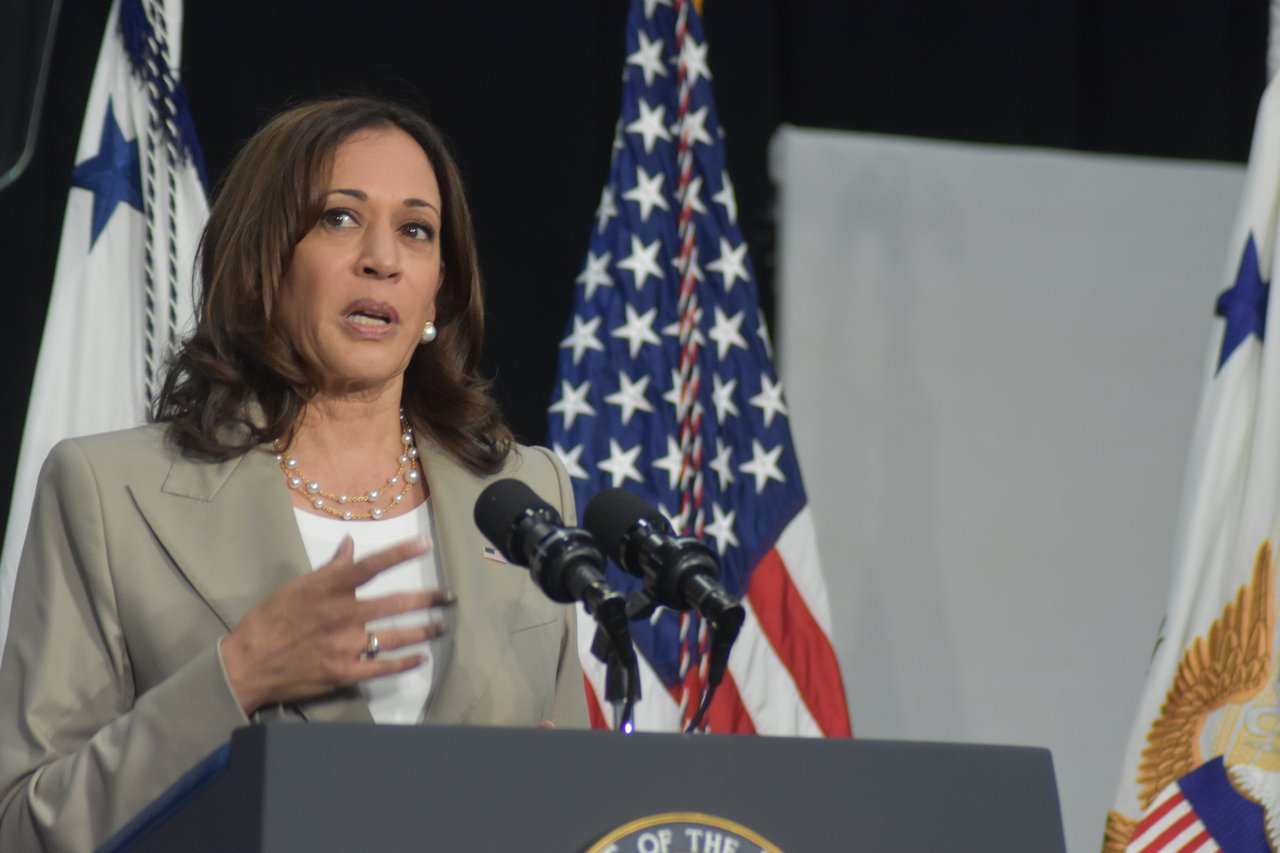
Former Vice President Kamala Harris and Congresswoman Alexandria Ocasio-Cortez are facing a political hurdle: some Democratic candidates prefer to keep their distance during the November legislative elections.
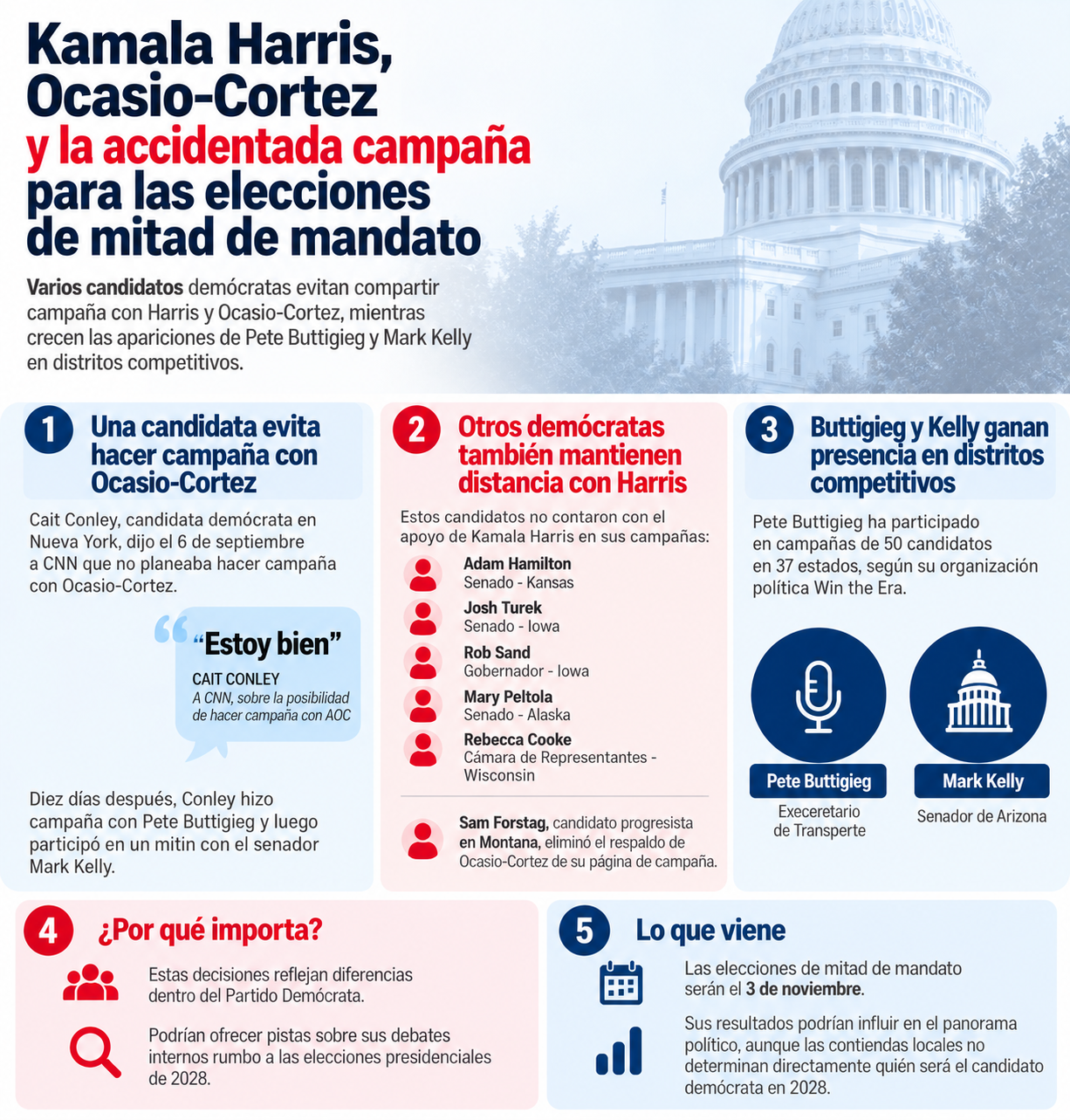
– Why it matters: Decisions about who participates in campaign events show differences within the Democratic Party and could offer clues about its internal debates heading into 2028.
Democratic Candidates Avoid Ocasio-Cortez in Midterm Elections
After Clinton and Harris’s losses, cautious voters might worry that for Democratic female presidential candidates the third time may not be a charm. https://t.co/fnNhswP3pn
— USA TODAY (@USATODAY) October 11, 2026
Cait Conley, who is seeking to defeat Republican Mike Lawler in New York, publicly rejected the possibility of campaigning with Ocasio-Cortez.
During an interview with CNN’s Dana Bash on September 6, Conley responded, “I’m good,” when asked about that possibility.
The former Army veteran and former national security official explained that she preferred to focus on the needs of local voters.
YOU MAY BE INTERESTED: Trump bets on his allies, but Republicans could pay the price in the Senate
However, ten days later, she appeared alongside former Transportation Secretary Pete Buttigieg and later participated in a rally with Senator Mark Kelly.
– The fact: Lawler’s district was one of three in the country that supported Harris in 2024 but elected a Republican representative.
– The difference: Conley accepted support from Buttigieg and Kelly, although she avoided committing to campaign events with Ocasio-Cortez.
Kamala Harris Also Faces Obstacles Among Democratic Candidates
Interviews with strategists, donors, former Kamala Harris surrogates and other Democrats — including some who backed her in 2024 — revealed uncertainty about whether her moment was cut short, and whether she can lead Democrats back to power. https://t.co/9dsedqM7E3
— The Washington Post (@washingtonpost) October 6, 2026
The situation is not limited to New York. Other Democratic candidates have decided not to have Harris participate in their campaigns.
Among them are Adam Hamilton of Kansas; Josh Turek and Rob Sand of Iowa; Mary Peltola of Alaska; and Rebecca Cooke of Wisconsin.
Cooke, who is competing for a disputed district, has also shared campaign events with Buttigieg and Kelly.
Meanwhile, Sam Forstag, a progressive candidate in Montana, removed Ocasio-Cortez’s endorsement from his campaign page.
– The contrast: Buttigieg has participated in person in campaigns for 50 candidates in 37 states, according to his political organization Win the Era.
These decisions reflect different strategies but do not demonstrate a widespread rejection of Harris or Ocasio-Cortez by voters.
Why Some Democrats Prefer Buttigieg and Kelly
Democratic strategist Melissa DeRosa explained that competitive candidates seek companions who can connect with independents and moderates.
According to her analysis, a figure who excites certain sectors can also provoke rejection among other necessary voters to win.
Ocasio-Cortez maintains a marked progressive identity, especially due to her positions on immigration, public safety, and the elimination of ICE.
Harris, on the other hand, faces internal questions after her 2024 presidential defeat and the mobilization difficulties noted in a Democratic review.
– The process: Candidates select their companions based on the characteristics of each district, while national figures seek to maintain a political presence.
The November Elections Will Also Put Democratic Leadership to the Test
Harris, Ocasio-Cortez, Buttigieg, Kelly, and Gavin Newsom appear among the names mentioned in conversations about the 2028 Democratic presidential candidacy.
However, the legislative elections respond to local dynamics and do not constitute a direct measurement of presidential preferences.
– What’s next: The results of November 3 will allow evaluating campaign strategies, although they will not determine who will lead the party in 2028.
Source: USA Today