Cushing’s Syndrome Symptoms: Warning Signs, Causes, and Treatment


Posted on 09/08/26 at 07:13
- Excess cortisol
- Warning signs
- Diagnosis and treatment
Weight gain, exhaustion, and high blood pressure may seem relatively common, but when several changes occur together, there could be another explanation.
Cushing’s syndrome, also known as hypercortisolism, is a hormonal disorder caused by prolonged exposure to excessively high cortisol levels.
Although the condition is rare, diagnosing it can be difficult because some of its symptoms also occur with other health problems.
What You Need to Know About Cushing’s Syndrome
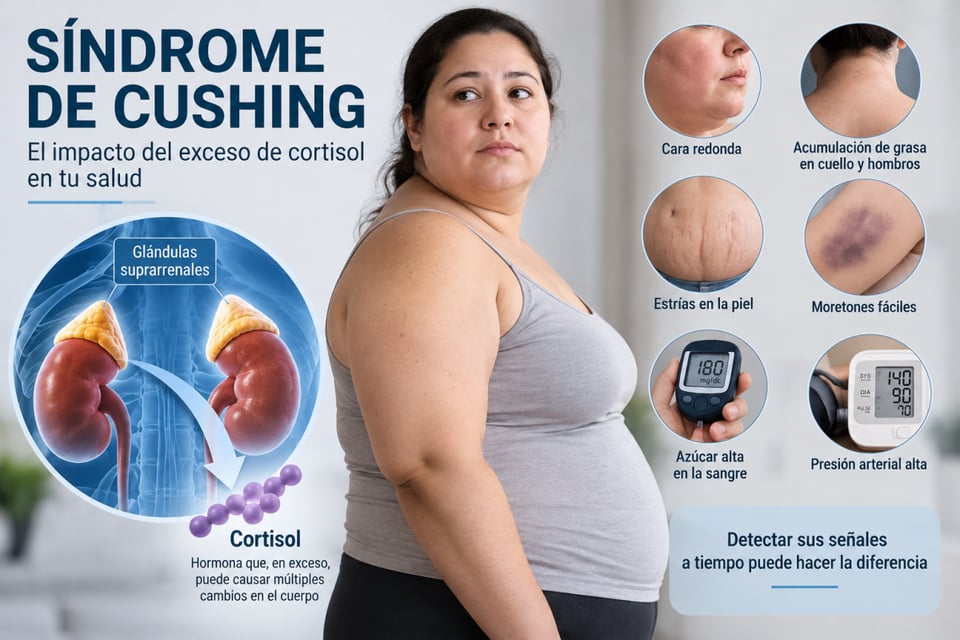
What Happens When Cortisol Levels Are Too High?
Cortisol is a hormone produced by the adrenal glands, which are located above the kidneys, and it performs important functions that help the body operate properly.
According to the Endocrine Society, normal amounts of cortisol help the body respond to stress, maintain blood pressure, and regulate the immune system.
Cortisol also plays a role in how the body uses fats, carbohydrates, and proteins for energy.
Problems arise when the body remains exposed to excessive cortisol levels for a prolonged period.
Cushing’s syndrome can have several causes, including:
- Prolonged use of steroid medications such as prednisone.
- Benign or cancerous tumors of the adrenal glands.
- Pituitary gland tumors that produce excessive amounts of the hormone ACTH.
- Certain tumors outside the pituitary gland, including some lung tumors.
The Endocrine Society distinguishes between exogenous Cushing’s syndrome, which is associated with external factors such as certain medications, and endogenous Cushing’s syndrome, which results from changes within the body.
When the condition originates specifically in the pituitary gland and involves excessive ACTH production, it is known as Cushing’s disease.
What Are the Symptoms of Cushing’s Syndrome?
MedlinePlus states that symptoms of Cushing’s syndrome include upper-body obesity, a rounded face, and relatively thin arms and legs.
However, the effects can extend far beyond weight gain or changes in physical appearance.
Symptoms described by medical sources include:
- Weight gain, particularly around the face, neck, torso, and abdomen.
- Fat accumulation around the neck or between the shoulders.
- Thin arms and legs.
- Muscle weakness and severe fatigue.
- Thin skin and easy bruising.
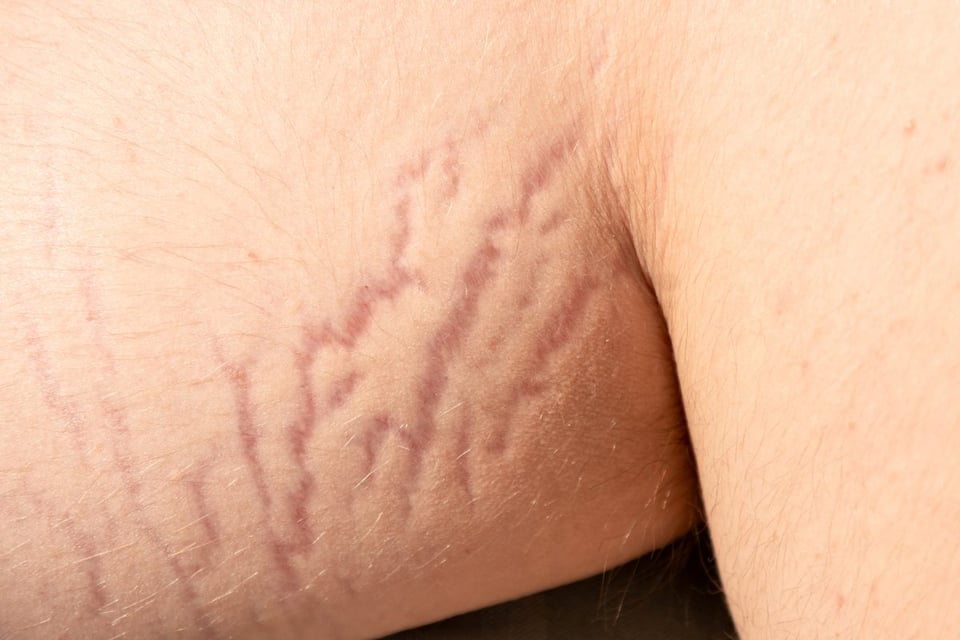
- Red or purple stretch marks.
- High blood pressure.
- High blood sugar levels.
- Loss of bone density.
- Irritability, anxiety, or depression.
- Sleep problems.
- Menstrual irregularities and increased hair growth in some women.
- Reduced sex drive and fertility problems in some men.
Having one of these symptoms does not automatically mean someone has Cushing’s syndrome.
Many of these warning signs can occur for numerous reasons, so a medical evaluation is necessary to determine their cause.
How Do Doctors Diagnose Excess Cortisol?
A diagnosis cannot be based solely on visible physical changes.
A healthcare provider may review the patient’s medical history, perform a physical examination, and order tests to determine whether cortisol production is abnormal.
- One test measures cortisol in urine collected over 24 hours.
- Another measures cortisol in saliva at night, when levels should normally be low.
Doctors may also use a dexamethasone suppression test to evaluate how the body responds to this steroid.
Once excess cortisol is confirmed, additional tests, including CT scans or an MRI, may be necessary to identify the underlying cause.
Is This Syndrome Treatable?
Yes, but there is no single treatment for every patient because doctors must first determine the cause of the excess cortisol.
When the condition is related to steroid medications, a doctor may gradually reduce the dosage when appropriate.
Patients should not stop these medications suddenly on their own. Any treatment changes must be made under medical supervision.
When a tumor is responsible, treatment may include surgery and, depending on the individual case, medications, radiation therapy, or other treatments.
Therefore, anyone experiencing persistent physical changes accompanied by weakness, hypertension, elevated blood sugar, frequent bruising, or other symptoms should consult a healthcare professional.
An endocrinologist may participate in the evaluation, confirm the diagnosis, and determine the cause of the hormonal imbalance.
Warning: This information is for educational purposes only and does not replace a medical evaluation, diagnosis, or treatment. If you have persistent or concerning symptoms, consult your doctor.
You May Be Interested: Ozempic under scrutiny: Study finds an unexpected association with mental health
Were you familiar with these symptoms, or did you know that excess cortisol could cause so many changes throughout the body?
SOURCE: MedlinePlus / US National Library of Medicine / Health Library; Endocrine Society.