Crypto This Week: What to Know About the October CPI and PPI Data



Posted on 11/10/26 at 10:30
Update (November 10, 9:05 a.m. ET): The Bureau of Labor Statistics (BLS) reported today, at 8:30 a.m. ET, that the CPI (CPI-U) rose 0.4% in October on a seasonally adjusted basis, after a 0.6% increase in September. Excluding food and energy, the core index rose 0.3%, the same as in September and August; housing rose 0.3% and accounted for more than 30% of the monthly increase, while food rose 0.5%, energy 0.7% (after 5.2% in September) and gasoline 1.0%. The BLS is not publishing the 12-month change for most series because it did not collect data in October 2025 due to the government shutdown. The October PPI is still scheduled for Friday, November 13, at 8:30 a.m. ET.
If you’re following crypto this week, you should mark two dates on your calendar: Tuesday, November 10, and Friday, November 13, 2026. Those are the days the Bureau of Labor Statistics (BLS) is scheduled to release its October price data. Here’s what those reports are and why the market pays so much attention to them.
What Is Being Released, and When?
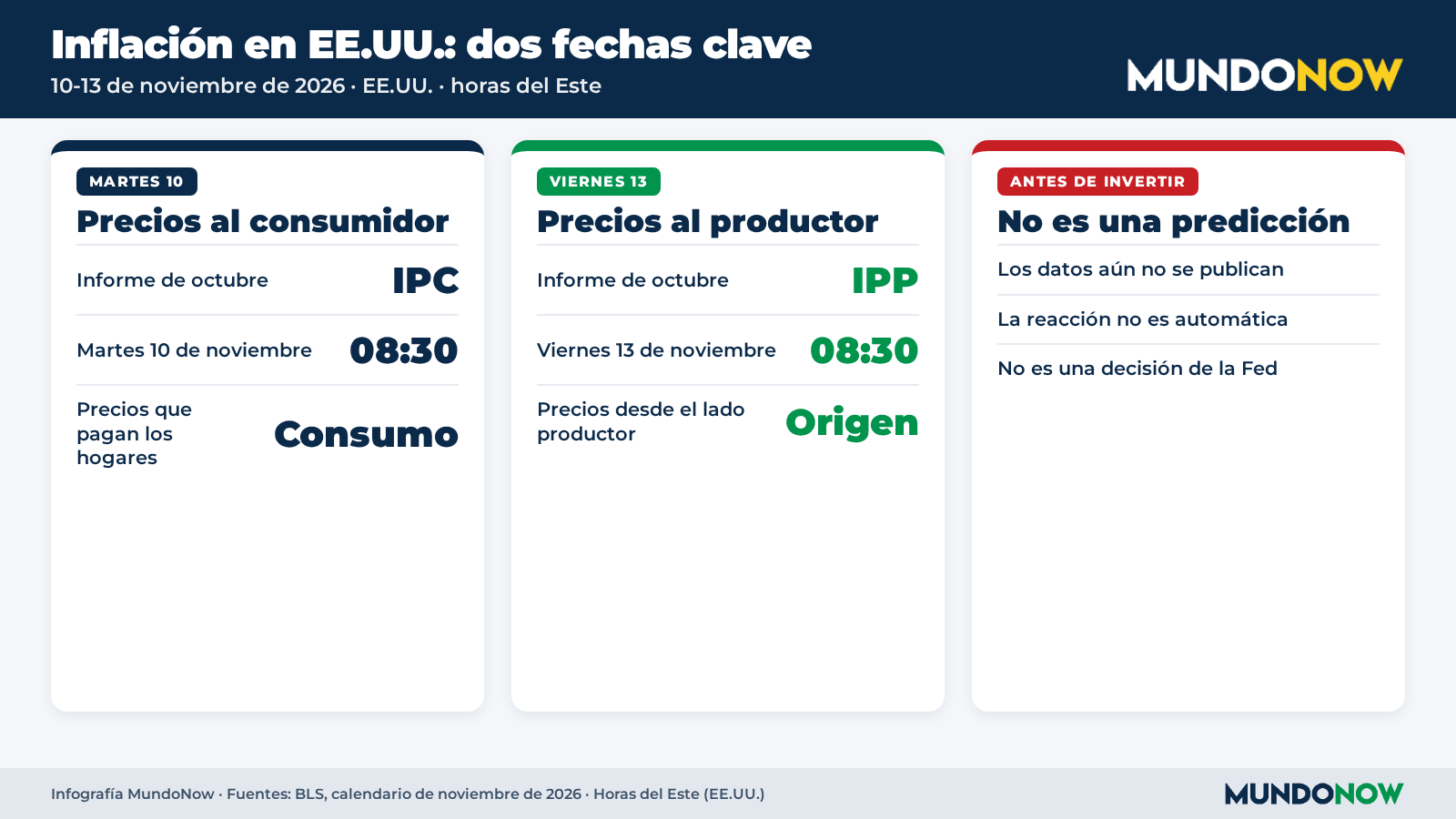
According to the BLS’s official calendar, the October consumer price index (CPI) comes out Tuesday, November 10, at 8:30 a.m. Eastern time. The October producer price index (PPI) follows on Friday, November 13, at the same time.
How do they differ? The CPI tracks the prices consumers pay. The PPI measures prices from the producers’ side. They are not identical, and neither one alone determines what the Federal Reserve will do. Also, neither of these dates is a Fed rate meeting.
What Does All This Have to Do With Crypto?
According to Bloomingbit, which cites information from CoinDesk, the sector is watching both reports this week. The reasoning goes like this: if inflation came in higher than expected, pressure for further rate hikes could grow. That could weigh on risk assets, including cryptocurrencies.
In general terms, higher rates can make risky investments less attractive. But the reaction depends on what the market had already expected, so there is no automatic rule that bitcoin will rise or fall with each data release.
There is also a schedule of corporate earnings reports. According to Bloomingbit, results from companies tied to the sector are drawing attention. For Thursday, November 12, that outlet points to Figure Technology Solutions before the market opens and Gemini Space Station after the close. One important caveat: buying shares of a crypto-related company is not the same as buying a cryptocurrency. They are different investments, with different risks.
Who Is Affected, and How?
If you’re a small saver with some money in crypto, a week with major data releases is a good reminder that the risk is real. Sharp moves can go in either direction, and no one can guarantee you gains.
For companies in the sector, earnings reports help gauge their business. But they don’t eliminate uncertainty, because their business also depends on how the broader market behaves.
What if you don’t invest at all? CPI data is still useful to you: it helps you understand how the cost of living is changing. That said, it doesn’t guarantee immediate price cuts at the grocery store or on your rent. It’s a snapshot of what happened in October, not a recipe for your budget.
What Can You Do Now?
First, write down the dates and times: Tuesday, November 10, and Friday, November 13, at 8:30 a.m. Eastern. Second, when the data comes out, compare it with what the market expected, not just the bare number. And third, don’t make money decisions based on one day’s headline.
If you want to keep digging, we have our previous guide to bitcoin and central banks, which provides useful context. You can also read how rate expectations affect your wallet.
The question worth asking yourself is this: how much risk are you willing to take on if the market moves more than you expected?
Sources: BLS: official November 2026 calendar; Bloomingbit: sector schedule, citing CoinDesk. Data accessed on November 9, 2026.