Woman Who Committed $800,000 in Pandemic Fraud Caught and Convicted



Posted on 11/08/26 at 22:05
A woman from Hamden, Connecticut, pleaded guilty to nearly $800,000 in fraud involving IRS refunds based on the employee retention credit and another pandemic credit, according to the U.S. Attorney’s Office for the District of Connecticut. The case serves as a warning to small business owners who receive offers to «claim» these benefits.
- Tonya Barham, 63, pleaded guilty on Tuesday, November 3, 2026, to filing false claims. She has not yet been sentenced.
- Her company, Blacfoot LLC, received nine IRS checks totaling $799,052, accompanied by fabricated statements about the number of employees and salaries.
- The IRS warns about promoters who charge a percentage of the refund and claim you qualify without reviewing your tax situation.
Why it matters: according to the IRS, those who claim the credit without being eligible must return it and may owe penalties and interest. Additionally, according to the GAO, the IRS can pursue fraud cases without a time limit.
How the scheme worked
According to the U.S. Attorney’s Office, Barham owned Blacfoot LLC, a small business selling health products, lotions, oils, and candles. The company had almost no income and no employees.
In late 2021, people she knew told her to open an account with an online tax-preparation service, and she gave them her username and password. Between March 2022 and January 2023, these individuals used the account to file false employer quarterly tax returns (Form 941) with the IRS, inventing the number of employees and salaries. They requested large refunds of the Employee Retention Credit (ERC) and the Sick and Family Leave Credit (SFLC).
When the IRS contacted her to verify, Barham provided false information, such as that her business had five employees. Between July and November 2022, the company received nine checks totaling $799,052. The U.S. Attorney’s Office indicates that she handed over part of the money to those who organized the scheme, who have not been publicly identified.
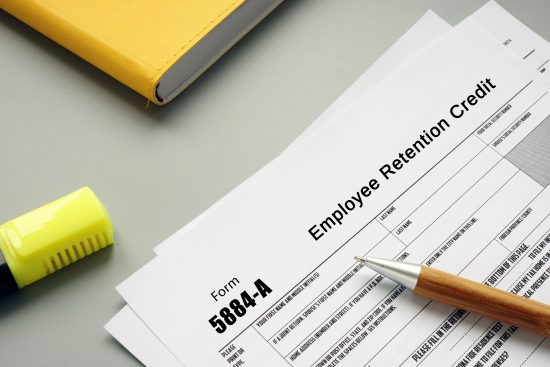
What is the employee retention credit
According to the statement, the ERC was created in 2020 under the CARES Act to reimburse employers for a portion of the salaries they paid to retain employees during the pandemic. The SFLC reimbursed small and medium-sized businesses for the cost of paid sick and family leave related to COVID-19.
The IRS states that the only way to claim the ERC is by filing a federal payroll tax return. As of the week ending October 3, 2026, it had around 13,000 pending claims in various stages. The GAO, in a February 2026 report, noted that the IRS processed nearly 5 million claims through June 2025 and that some marketing companies convinced confused employers to file claims to keep a portion of the proceeds.
Red flags, according to the IRS
Many Latino small business owners have seen ads for this credit. These are the warning signs the IRS asks you to watch out for:
- Unsolicited ads, calls, emails, or messages.
- Promoters who claim to determine in minutes if you qualify.
- High upfront fees.
- Fees calculated as a percentage of the refund.
- Telling you that you qualify before discussing your tax situation.
- Pressure with phrases like «you have nothing to lose».
- Ads that appear to be official government letters.
And a basic rule: never share the username and password of your tax accounts with anyone else.
What’s next in the case
Barham waived her right to be formally charged by a grand jury and pleaded guilty before U.S. District Judge Sarah F. Russell in New Haven. The announcement was made by U.S. Attorney David X. Sullivan and Thomas Demeo, special agent in charge of the IRS Criminal Investigation Division in New England, who investigated the case.
The crime carries a maximum penalty of five years in prison. Barham was released on a $40,000 bond, and her sentencing is scheduled for January 26, 2027.
In the meantime, if you have already filed a claim on the advice of a third party, it’s a good idea to review it with a trusted tax professional. To plan for the next season, check the IRS changes for 2027.
Sources: U.S. Attorney’s Office for the District of Connecticut, via Fox61; IRS: Employee Retention Credit; GAO. Data consulted on November 7, 2026.