US Home Prices Have More Than Doubled Since 2000 Despite Lower Mortgage Rates


Posted on09/23/26 at 06:00
Buying a home in the US 26 years ago meant paying higher mortgage interest rates than today, but there was a major difference: homes cost much less.
In 2000, a new home had a median annual price of approximately $169,000, while in the second quarter of 2026 it reached $410,700, according to data from the Census Bureau and HUD compiled by the Federal Reserve Bank of St. Louis.
- Why it matters: The increase in home prices forces new generations to save for larger down payments and finance much more money, even when mortgage rates are lower than they were decades ago.
Lower Mortgage Rates Do Not Necessarily Mean More Affordable Homes
In 2000, the average annual rate for a 30-year fixed mortgage was approximately 8.05%, according to historical data from Freddie Mac.
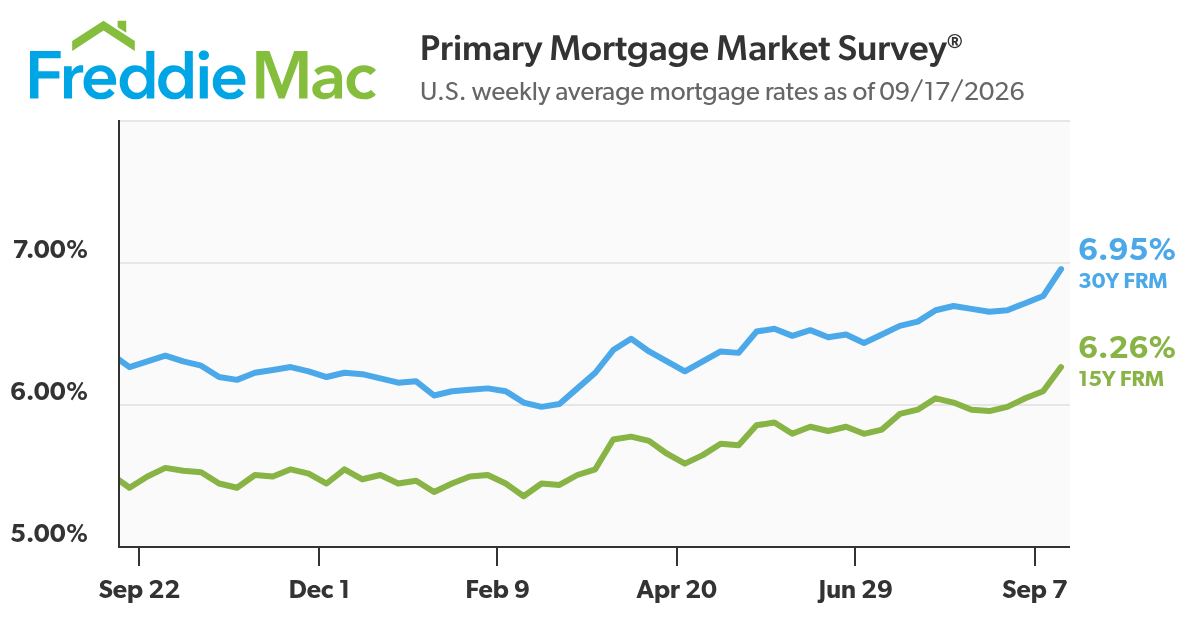
Today, the picture looks better on paper: Freddie Mac reported an average rate of 6.95% as of September 17, compared with 6.76% the previous week.
But home prices have changed dramatically:

Assuming a 20% down payment, buying a $169,000 home in 2000 required approximately $33,800 upfront and financing $135,200.
- At an 8.05% rate, the payment would be around $997 per month for principal and interest.
Today, 20% of a $410,700 home is $82,140, leaving a mortgage of $328,560.
- With a 6.95% rate, the payment would be around $2,175 per month, not including taxes, insurance, HOA fees, or other expenses.
A New Generation of Hispanic Homebuyers in the US
The difference is especially relevant for Hispanics, a relatively young population that continues to form households and pursue homeownership.
- NAHREP reported that Hispanics added 441,000 homeowner households in 2025, bringing the total to a record 10.2 million.
However, the Hispanic homeownership rate fell to 48.5% because new household formation grew even faster.
NAHREP identifies high home prices, mortgage rates, and a shortage of affordable homes as barriers that continue to keep qualified families out of the market.
Homeownership Also Plays a Major Role in Building Wealth
The comparison does not mean that buying a home was easy 26 years ago: wages, access to credit, and broader economic conditions were also different.
- But it illustrates a paradox: A lower mortgage rate does not guarantee greater affordability when buyers need to finance a much more expensive home.
The difference also has generational implications. The Hispanic Wealth Project reports that real estate accounts for 45.5% of Hispanic household wealth.
For those still trying to buy, overcoming the price barrier can affect not only where they live, but also when they are able to begin building household wealth.