Showing ID to Vote: Trump’s Requirement Sparks Controversy


Posted on 03/19/26 at 01:57
- Trump Pushes Voter ID Law
- Election Law Sparks Debate
- Impact on Minorities Raises Concerns
The requirement to present a photo ID to vote is once again at the center of debate in the United States, driven by President Donald Trump.
The measure has majority support in polls but also faces strong criticism over its potential impact on vulnerable groups.
What Does Trump’s Save America Law Propose?
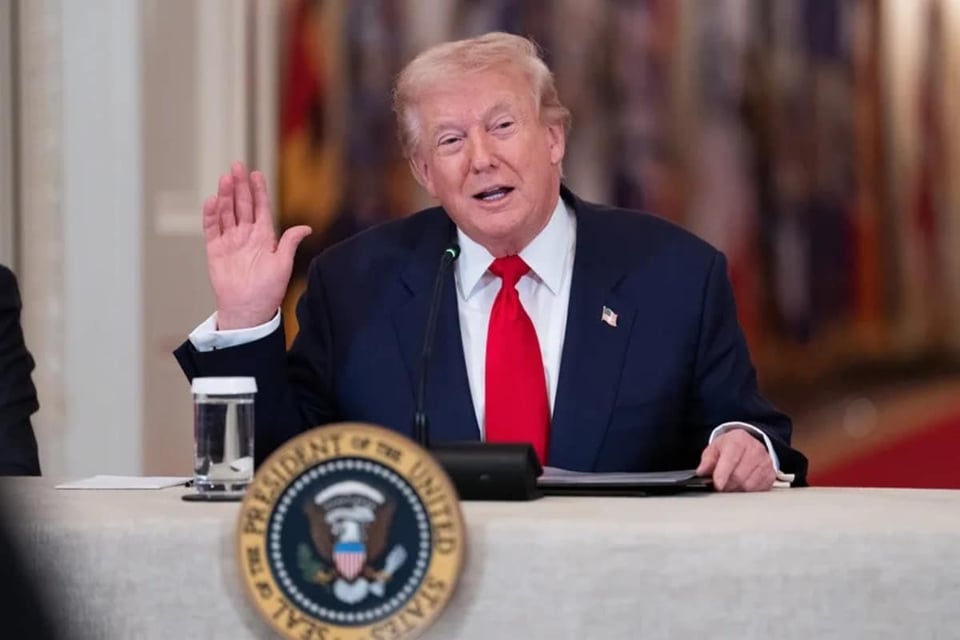
President Donald Trump is increasing pressure on the Senate to pass federal legislation requiring voters to present a photo ID.
The initiative, called Save America, aims to tighten election requirements nationwide.
The bill was approved in February by the House of Representatives but remains stalled in the Senate, where Republicans lack sufficient votes.
Amid this situation, Trump has escalated his rhetoric and warned he could veto other legislation from Congress until this proposal is approved.
- The political context is also key: the president has once again questioned the integrity of the electoral system ahead of the November midterm elections, repeating claims of fraud he made in 2020.
How Does Voter Identification Work Today?

Currently, the U.S. electoral system is decentralized, with each of the 50 states setting its own rules.
The Republican proposal would change this by requiring proof of citizenship during registration and a government-issued photo ID when voting.
At present, at least 36 states already require documents such as a driver’s license, passport, or state-issued ID.
However, 14 states and Washington, D.C., allow alternatives such as sworn statements or verification of personal information in voter rolls.
Trump’s proposal seeks to standardize and tighten these rules nationwide, reducing current alternatives.
Is There Really Voter Fraud in the U.S.?
One of the main arguments from Trump and Republicans is that these measures are necessary to prevent irregularities such as identity fraud or non-citizen voting.
However, available data suggests otherwise.
According to a study by the Brennan Center, voter fraud in the United States is extremely rare, with rates ranging between 0.0003% and 0.0025%.
The report even notes that a person is more likely to be struck by lightning than to commit voter fraud.
In this context, academics have raised concerns.
“Given the lack of evidence of voter fraud, why is Congress spending time and effort on this?” asked Mike Gilbert, a law professor at the University of Virginia, in comments to EFE.
Who Could Be Affected by The Voter ID Requirement?
The strongest criticism comes from civil rights organizations and opposition groups, who warn that the measure could reduce voter participation among certain populations.
Those most affected could include low-income individuals, racial minorities, students, and people with disabilities.
A study from the University of Maryland estimates that 21.3 million Americans do not have easy access to documents proving their citizenship, and 3.8 million lack any form of documentation.
Additionally, obtaining these documents may involve financial costs or long travel distances, creating further barriers for many voters.
Despite these concerns, public support for the measure is broad. According to the Pew Research Center, 95% of Republicans and 71% of Democrats support voter ID requirements.
It also has cross-racial support: 85% of White Americans, 82% of Latinos, and 76% of African Americans.
What’s Next: Political Pressure and Ongoing Debate
The initiative will continue to generate political tension in Washington as it remains stalled in the Senate.
The debate goes beyond election security and touches on voter access and fairness within the system.
The outcome of the Trump voter ID law controversy could directly influence participation rules in upcoming elections and the broader political balance in the country.
YOU MAY ALSO BE INTERESTED IN: ICE Detains Wife of Former North Miami Mayor While Authorities Seek to Revoke His Citizenship
SOURCE: EFE