Republicans Back Trump’s Strategy but Question the Endgame


Posted on03/30/26 at 16:55
- Republicans support Trump and the war in Iran
- Division over ground troops
- Debate grows in election season
According to CBS, the Republican Party shows broad support for President Donald Trump’s intervention in Iran, although divisions remain over how the conflict should unfold.
The debate is taking place in a key electoral context, where the war could directly influence control of Congress.
Meanwhile, leaders, voters, and conservative figures express support—but also concern about a possible escalation.
The war in Iran has become a central issue within the Republican Party and could have a direct impact on the political and electoral landscape in the United States.
Majority support Trump and Iran war with nuances within the Republican Party
Many Republicans at CPAC stand by President Trump on Iran, but they’re divided on how the war could end. https://t.co/ovXJd9TAYm
— CBS News (@CBSNews) March 28, 2026
Most Republicans support military intervention in Iran.
According to a CBS News poll, 84% of Republicans approve of the military action led by the Trump administration.
Support drops to 70% among those who do not identify with the MAGA movement.
This backing reflects a strong base within the party.
However, it is not uniform.
Some Trump supporters have expressed doubts about the scope of the conflict.
You may also like: Chaos in Congress: Republicans Break Key DHS Agreement
There is also historical skepticism toward U.S. military intervention abroad.
The debate is intensifying during the election season.
Public perception of the war, as well as its economic effects, could influence voters.
Among independents, opposition is significant.
According to the same poll, 69% oppose military intervention in Iran.
Concerns about a possible military escalation
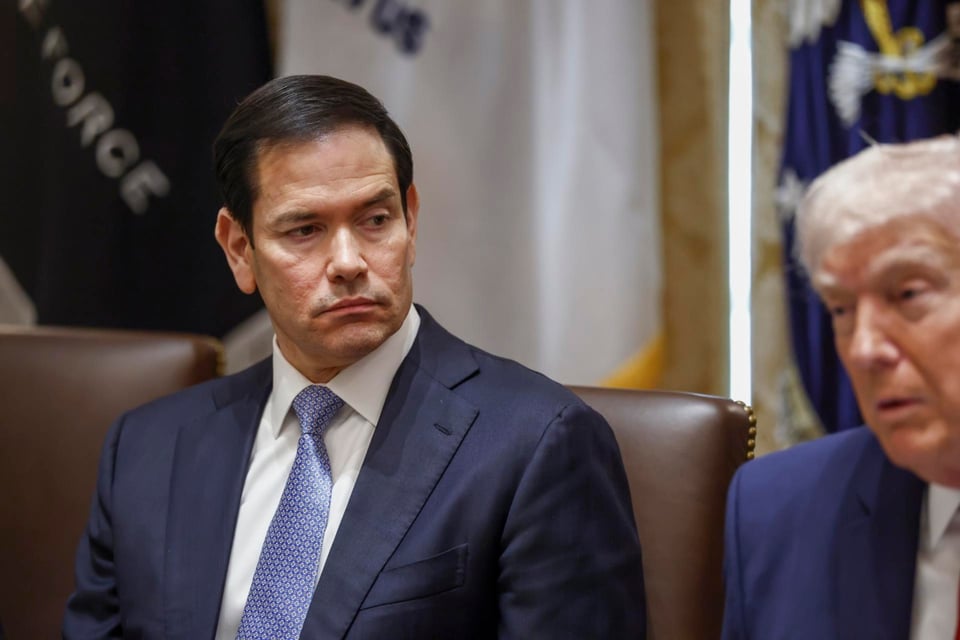
At the Conservative Political Action Conference (CPAC), held in the Dallas area, the issue dominated discussions.
Attendees generally supported the president but made their concerns clear.
One of the main worries is the possibility of deploying ground troops to support the intervention in Iran.
Secretary of State Marco Rubio stated that such a move would not be necessary.
However, Trump has not ruled out the option.
Pentagon officials have prepared detailed plans for a potential deployment.
Some attendees openly rejected this possibility.
“I don’t want our boys and girls going to fight in Iran,” said Janie Dean, a nurse from central Texas, in regards to the Iran war.
Despite this, Dean reaffirmed her trust in the president’s judgment.
Former Representative Matt Gaetz also expressed support for Trump.
However, he warned about the consequences of a ground invasion.
He noted it could increase the cost of living and impact national security.
Gaetz urged prioritizing diplomatic tools.
Divided voices and political pressure in an election year
The Iran war has also generated differing opinions within the party itself.
Representative Nancy Mace expressed concern over the lack of an exit strategy.
She warned about the risk of a prolonged war.
Meanwhile, Joe Kent resigned as director of the National Counterterrorism Center.
He stated that Iran did not pose an imminent threat.
The White House rejected his statements.
The debate also includes Iranian Americans present at CPAC.
Some support military intervention in Iran with the goal of overthrowing the regime.
Others believe that even deploying troops may be necessary.
Shahin Nezhad, a petroleum engineer based in Houston, defended the need for external support.
He argued that the Iranian regime cannot be overthrown through civil disobedience alone.
In contrast, doubts persist about the direction of the conflict.
Steve Bannon stated that the final decision rests with the president.
He also suggested the need for an informed national debate.
Trump himself has sent mixed messages.
At times, he has proposed limited objectives.
At others, he has encouraged regime change in Iran.
These positions reflect internal tensions within the Republican Party.
Support for Trump remains strong.
But differences over how to end the war highlight an ongoing debate at a politically decisive moment, reinforcing the Republicans Trump Iran war debate.