Cost of Living Could Reshape the November Midterm Elections


Posted on 09/01/26 at 16:48
Pocketbook concerns are emerging as the main battleground in the November midterm elections, while immigration and crime continue to favor Republicans.
The cost of living has become the most important factor for 47% of registered voters when deciding how to vote in the November midterm elections, according to Reuters/Ipsos.
- Why it matters: Economic concerns could complicate the election for Republicans if voters ultimately focus on household finances rather than immigration or crime.
Cost of Living Overtakes Other Campaign Issues
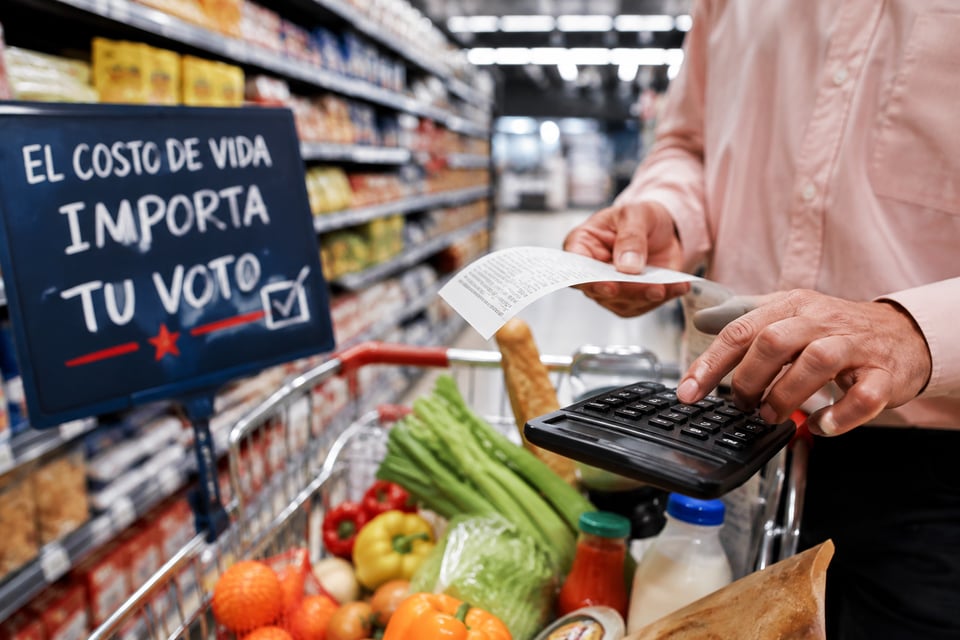
The Reuters/Ipsos poll, conducted between August 28 and 31, shows that household finances occupy a particularly important place in voters’ minds ahead of November.
The issue also directly affects President Donald Trump: 71% of adults disapprove of how he is handling the cost of living, while only 22% approve.
- The advantage: Reuters/Ipsos data shows that voters prefer Democrats over Republicans to address the cost of living, 38% to 34%.
- The paradox: Republicans maintain advantages on immigration and crime, but those issues carry less electoral weight than pocketbook concerns in this poll.
The trend did not emerge suddenly. Ipsos had already warned in late August that the cost of living would likely be one of the defining issues in the midterm elections.
Independent Voters Leave Another Battle Open
The cost of living becomes even more significant among independents because many do not clearly view either party as better prepared to address it.
This means that economic concern does not automatically translate into votes for Democrats. Both parties still have an opportunity to persuade voters without a firm party affiliation.
- What’s at stake: Democrats may try to convert economic dissatisfaction into electoral support, while Republicans may seek to regain ground by defending their economic record.
- The trend: In early August, Reuters/Ipsos had already found that Democrats held an eight-point advantage over Republicans in voter confidence regarding the cost of living.
Enthusiasm Must Translate Into Votes
Another difference emerges when voters are asked about enthusiasm. According to the data, 40% of Democrats are “very enthusiastic” about voting, compared with 27% of Republicans.
However, enthusiasm does not automatically translate into participation. Both parties report similar levels of certainty about voting, making mobilization a decisive factor.
- The key: In midterm elections, when turnout is generally lower than in presidential elections, successfully bringing supporters to the polls can determine close races.
- The limit: A Democratic advantage in enthusiasm or on the cost of living does not, by itself, determine which party will control Congress.
The Reuters/Ipsos poll surveyed 1,167 adults and has a margin of error of ±2.9 percentage points for the full sample.
Without determining which party is better, the data shows the different political strengths that current polls attribute to each one: the economy for Democrats and immigration and crime for Republicans.
Between now and November, the question is which of these issues will carry the most weight and which party can transform concern and enthusiasm into actual voter turnout.
In conclusion, the cost of living could ultimately outweigh every other issue in November.
Democrats have an opportunity if they can convert economic dissatisfaction and greater enthusiasm into votes, while Republicans will seek to give immigration and crime a more prominent role in the campaign.
The race remains open, and independent voters could ultimately tip the balance.
You May Be Interested: Trump Mail-In Voting Rules Remain Blocked by Federal Judge
SOURCE: IPSOS/ MU Mass Poll