Jews and Arabs March Together in Israel to Demand Government Change


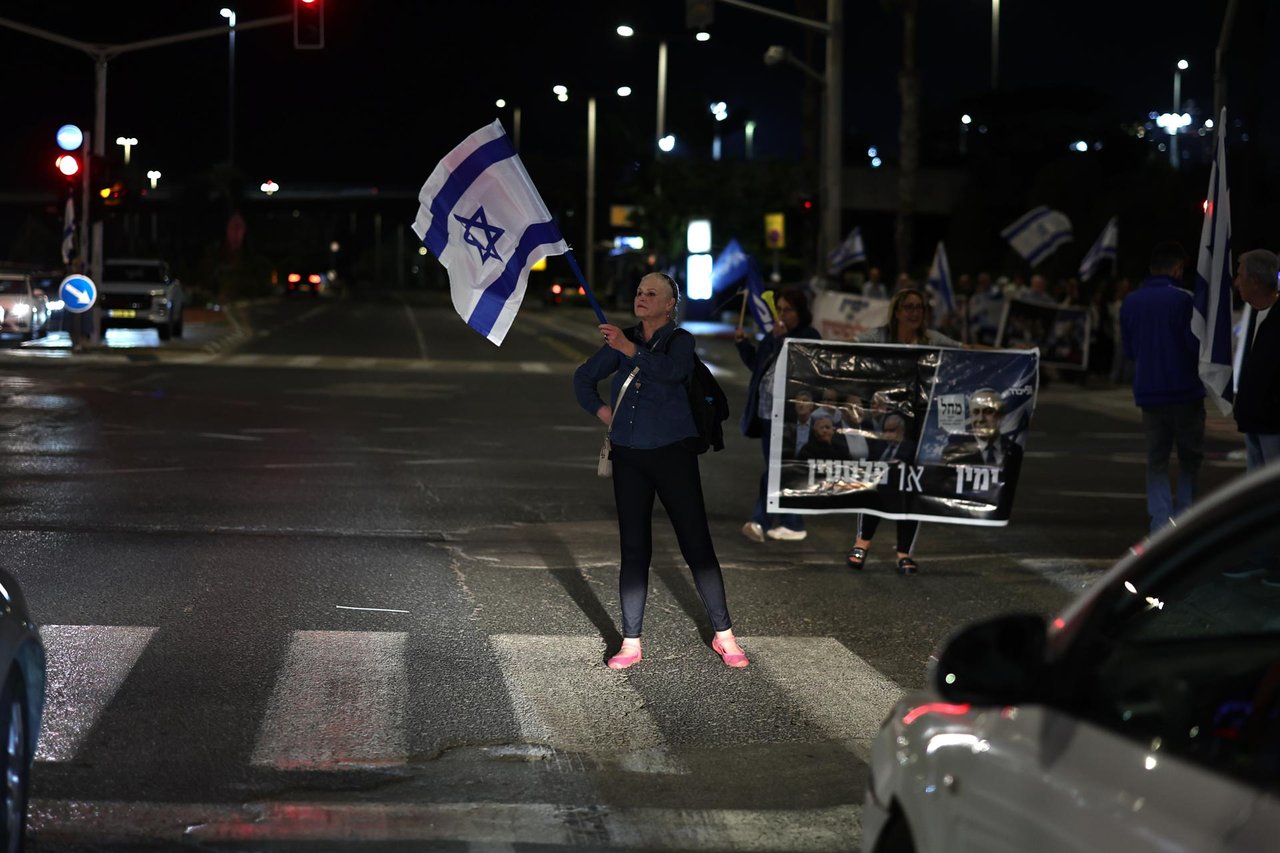
Posted on 11/02/26 at 08:43
Background: Protests have spread across several cities after elections left Benjamin Netanyahu without a parliamentary majority. Arab parties could be decisive in forming the next government.
Why it matters
Thousands of Israelis are taking to the streets to demand something that until recently seemed politically unlikely: a government formed with the participation of Jewish and Arab parties.
The protests began after the legislative elections on October 27 and gained momentum over the weekend. On Saturday, October 31, around 2,000 people marched in Tel Aviv, while rallies were held in Jerusalem, Haifa, and other locations.
Behind the protests is a question that could define Israel’s political future: are opposition parties willing to share power with representatives of the Arab population to replace Benjamin Netanyahu?
The essentials
- Netanyahu lost his majority: his bloc won 53 of the 120 seats in the Israeli Parliament.
- The opposition is divided: four opposition parties led by Jewish politicians won 48 seats, while two Arab formations won 19.
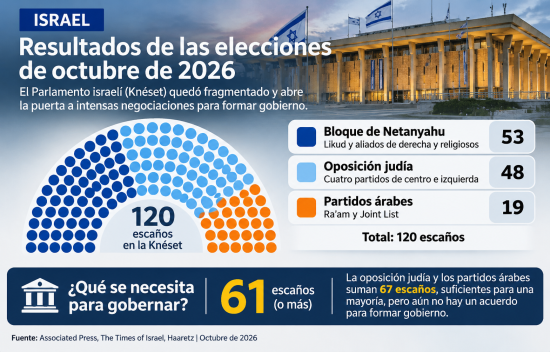
Israel_ Fragmented Elections in the Knesset, Source: MundoNow - A possible majority: together, these parties have 67 seats, six more than the 61 needed to govern.
- The streets are pressing: the Jewish-Arab movement Standing Together is leading protests to demand political cooperation.
- There is also resistance: Netanyahu supporters organized counter-protests rejecting the participation of Arab parties in the government.
From 300 protesters to thousands in the streets
On October 28, Haaretz documented rallies of around 300 people in Jerusalem, Tel Aviv, and Haifa. The protesters demanded a new political coalition that included Jewish and Arab representatives.
A day later, the protests reached the vicinity of opposition leader Gadi Eisenkot’s residence in Herzliya, where participants asked him to negotiate with Arab parties.
The movement gained visibility on Saturday, October 31. Thousands of protesters, according to Haaretz coverage reported by Anadolu, participated in rallies across the country. The Times of Israel estimated the main march in Tel Aviv at around 2,000 people.
Among their slogans were messages against racism and in favor of political equality between Jewish and Arab citizens.
The Arab vote changes the political equation
The Ra’am and Joint List parties jointly won 19 seats, a representation that could be decisive in forming a government.
But numbers are not enough.
Although the parties opposed to Netanyahu have 67 lawmakers, several opposition leaders have rejected a coalition with Arab parties. These include Avigdor Lieberman, while other leaders maintain reservations about this possibility.
The situation also presents differences between the Arab formations themselves. Ra’am, led by Mansour Abbas, has expressed its willingness to participate in a government. Joint List, on the other hand, has raised the possibility of supporting an alternative to Netanyahu without formally joining the cabinet.
The paradox: there is a numerical parliamentary majority opposed to the current prime minister, but not yet a political majority willing to govern together.
Resistance from Netanyahu’s supporters
The protests have also sparked a response from sectors of the Israeli right.
On October 31, around 200 Netanyahu supporters participated in a counter-protest in Tel Aviv, according to The Times of Israel. They rejected the inclusion of Arab parties in a future coalition and demanded an investigation into alleged electoral irregularities.
Likud leaders have questioned the legitimacy of part of the Arab vote, but Israeli electoral authorities have noted that the known complaints do not cast doubt on the overall results of the elections.
The tensions show that the debate goes beyond the formation of the next government. It also confronts different visions of the identity of the Israeli state and the role that its Arab citizens should play in national decision-making.
The broader landscape: a deeper political change?
The participation of Arab parties in the Israeli government has precedents. In 2021, Ra’am joined the coalition led by Naftali Bennett, becoming the first independent Arab formation to formally participate in an Israeli government coalition.
However, the Gaza war, the Hamas attack on October 7, 2023, and deep political divisions have complicated cooperation between the communities.
The current protests once again raise this possibility, but in a context of greater polarization.
Not all participants necessarily share the same vision for the Israeli-Palestinian conflict. The immediate demand of the organizers is that Arab citizens of Israel have effective representation in the formation of the next government.
What’s next
The new Knesset is scheduled to begin its functions on November 10. Before a government can be established, parties will have to negotiate a coalition capable of gathering the necessary parliamentary support.
If negotiations fail, Israel could face another period of political deadlock and even new elections.
Conclusion
The marches represent a visible expression of a political demand that has gained new relevance after the elections: that Arab parties be considered potential government partners and not be excluded from negotiations due to their political or national identity.
But the support in the streets has not yet translated into an agreement between parliamentary leaders.
The question is no longer just who will replace Netanyahu, but whether Israeli political forces are willing to build a majority that includes their Arab citizens.
The answer could influence the composition of the next government and the future of relations between Jews and Arabs within Israel.
Sources
- Haaretz, October 28 and 31, 2026: coverage of protests in Tel Aviv, Jerusalem, and Haifa.
- The Times of Israel, October 31 and November 1: marches, counter-protests, and party positions.
- The Jerusalem Post, October 29: protest in front of Gadi Eisenkot’s residence.
- Associated Press, October 30: election results and difficulties in forming a government.
- Anadolu Agency, November 1: coverage of protests and Haaretz reports.
- Euronews, October 29: images of protests and police intervention.
- Al Jazeera / AFP, November 1: protests to demand a Jewish-Arab coalition.