Childhood vaccination rates drop in the U.S., raising concern over five diseases


Posted on 04/01/26 at 16:57
- Vaccination rates drop among children
- Influenza shows the largest decline
- Outbreak risk increases
The decline in childhood vaccination rates in the United States is increasing the risk of outbreaks of preventable diseases, amid changes in immunization policies.
Vaccination rates decline among young children in the US
In the U.S., declines in childhood vaccination rates against five diseases have been reported. https://t.co/wle6TvZGGz
— AlbertoRodNews (@AlbertoRodNews) March 30, 2026
According to EFE, vaccination rates among children up to age 2 have dropped for several diseases in the United States.
A study by the Centers for Disease Control and Prevention (CDC) identified declines in five vaccines.
The most significant drop was observed in influenza vaccination.
The rate for two-dose influenza vaccination fell by 7.4 percentage points.
This brought coverage down to 53.5% among children born between 2021 and 2022.
The study compared these figures with children born between 2019 and 2020.
Childhood vaccination rate declines were also recorded in other vaccines:
- Hepatitis B dropped by 1.8 percentage points
- Rotavirus decreased by 1.7 points
- Pneumococcal vaccine declined by 1.5 points
- Haemophilus influenzae type b (Hib) coverage fell by 1 point
The analysis was based on the 2024 National Immunization Survey (NIS-Child).
This survey includes recommended vaccines for 16 diseases.
Outbreak risks and unequal coverage
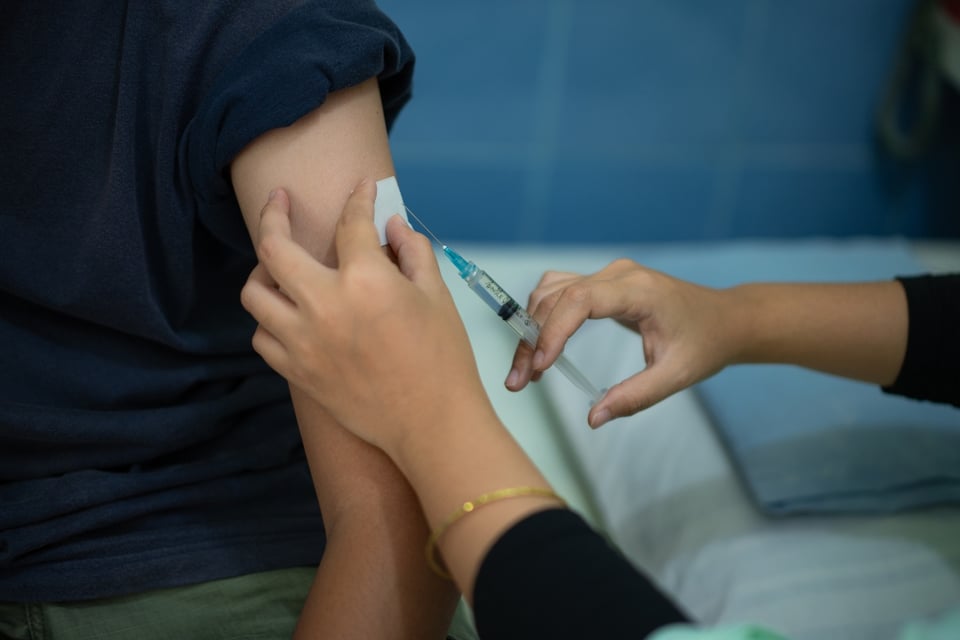
The childhood vaccination rates decline trend raises concerns about uneven protection across populations.
Report authors warned that the declines are not uniform.
While overall coverage remains stable for most vaccines, disparities exist between groups.
These gaps increase the risk of outbreaks of preventable diseases.
The report highlights 2,144 confirmed measles cases in 2025.
This marks the largest outbreak since the disease was declared eliminated in 2000.
Notably, 93% of infections occurred in unvaccinated individuals.
You may also like: New York to Cut Health Coverage for Thousands After Federal Cuts
The CDC also pointed to inequalities in vaccination coverage.
Childhood vaccination rates are lower among Black and Latino children.
They also affect children living in poverty.
Rural areas show lower coverage levels.
In contrast, children of Asian descent showed higher protection.
Among the lowest coverage rates:
- Hepatitis A: only 46.8% received two doses
- Influenza: 53.5% coverage
Additionally, 1.2% of children received no vaccines at all.
This figure is just below the target threshold of 1.3%.
Policy changes regarding childhood immunization in the US and debate
The childhood vaccination rates decline USA issue comes amid shifts in immunization policies.
The Department of Health and Human Services (HHS) announced changes to the vaccination schedule in January.
Four childhood vaccines were removed as mandatory:
- Rotavirus
- Influenza
- Meningococcal disease
- Hepatitis A
The measure sparked reactions across the medical community.
On March 16, a federal judge in Massachusetts blocked the changes.
The decision followed a lawsuit filed by the American Academy of Pediatrics.
Other medical organizations also joined the legal action.
The context coincides with the appointment of Health Secretary Robert F. Kennedy Jr., who has expressed skepticism about vaccines.
The vaccination debate continues across the United States.
Meanwhile, CDC data reflects a concerning trend in childhood coverage.
What’s next for childhood vaccination rates
The drop in vaccination rates presents significant public health challenges.
Disparities between population groups could worsen risks.
Monitoring coverage levels will be crucial in the coming years.
Political and judicial decisions will continue to shape immunization policies in the United States.