Voting in 2026: 7 Things to Know Before Casting Your Ballot


Posted on 10/02/26 at 15:30
From new identification requirements to changes in mail-in voting deadlines, election rules have changed significantly since the 2024 elections.
And there is a practical consequence: if you voted two years ago, don’t assume the 2026 voting process will be exactly the same in November. For more local information, don’t forget to visit: https://elections.mundonow.com/
Why 2026 Voting Rules Matter
Nearly every state has modified its election laws in some way since the last midterm elections. Some changes are minor. Others may determine what identification you need, when your mail-in ballot must arrive, or even which congressional district you vote in.
According to the 2026 Battleground Report from Voting Rights Lab, 13 states have restricted the types of identification voters can use or eliminated alternatives for those without certain identification. Six states passed laws to stop counting certain mail-in ballots that arrive after Election Day, even if they were mailed on time; Kansas’s measure was blocked by a state court.
The Brennan Center, meanwhile, reports that since the 2024 elections, lawmakers in 22 states have passed 47 new laws restricting some aspect of voter registration or the voting process. At the same time, 32 states passed 61 laws expanding access to voting.
- In other words: there is no single national trend. Depending on where you live, voting may have become easier, more complicated, or simply different in 2026.

What’s Changing
1. Voter Identification
Identification requirements are among the main changes.
Voting Rights Lab identified 13 states that since 2022 have limited the forms of identification voters can use or eliminated alternatives for voters without certain identification.
The most recent 2026 voting rules changes also affect different groups in different ways. The Brennan Center notes, for example, that Florida, Indiana, Montana, and New Hampshire passed laws eliminating or restricting the use of student IDs on Election Day.
- What it means for you: check now which forms of identification your state accepts. Don’t wait until you arrive at the polling place.
2. Mail-In Voting
Deadlines have also changed.
Six states have passed laws since 2022 to stop counting certain mail-in ballots that arrive after Election Day, even if they were mailed on time. Kansas’s law was blocked by a state court.
That makes it especially important in some states to send your ballot well ahead of the deadline.
3. Who Can Return Your Mail-In Ballot
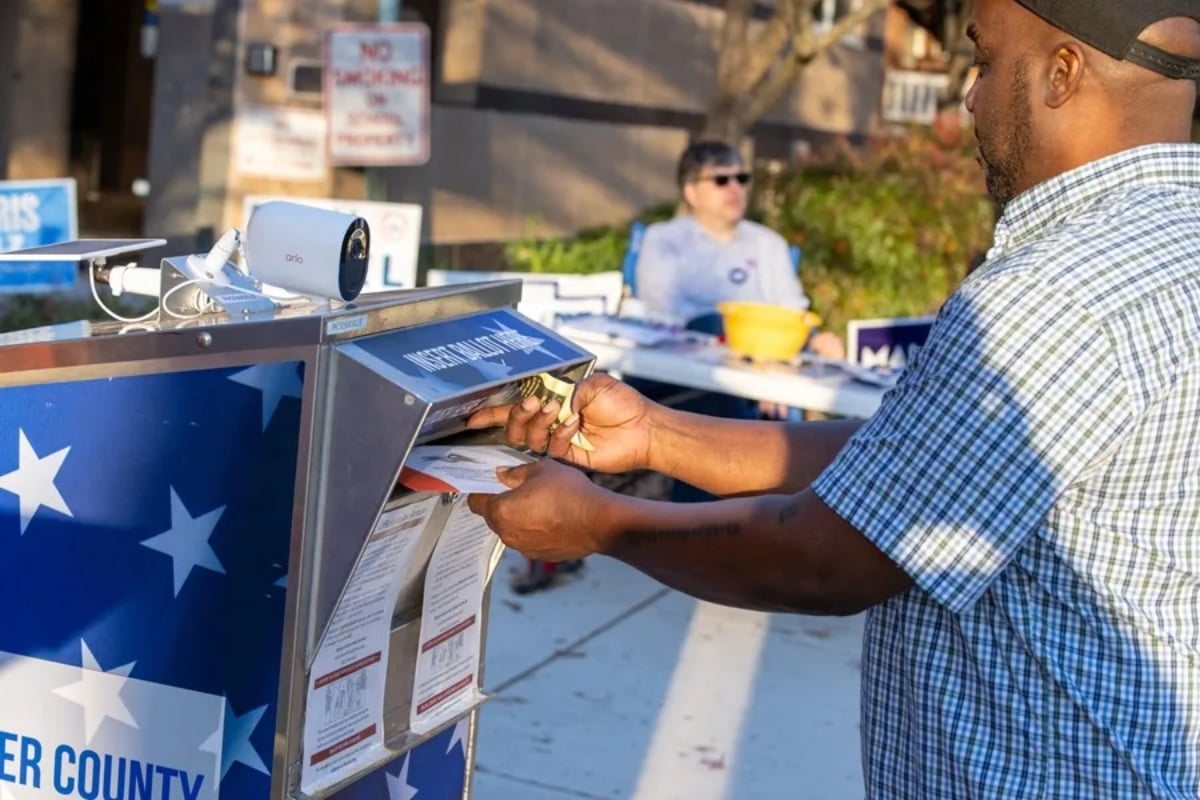
Some states have also limited who can return a mail-in ballot on someone else’s behalf.
These restrictions can have a particular impact on people who have difficulty physically reaching a polling place or drop-off location, including nursing home residents, people living in remote areas, and some voters with disabilities.
4. How Votes Are Administered and Counted
The 2026 voting rules changes do not affect only voters.
Voting Rights Lab highlights significant changes to the responsibilities of election officials in competitive states including Georgia, Iowa, Michigan, New Hampshire, North Carolina, Ohio, and Texas.
In Georgia, for example, rules and disputes over election procedures have included requirements involving manual counts and audits. The state conducted manual audits after the May 2026 primaries to verify the results.
- Important: a delay in learning the results does not necessarily mean there is a problem with the count. Procedures and timelines vary by state, and election results go through verification and certification processes before becoming final.
There’s Another Important Change: If You’re Voting in 2026, Your District May Be Different
The rules governing how to vote are only part of the story.
Since mid-2025, 10 states have adopted new congressional maps outside the usual post-census cycle. Eight of those new maps will be in effect for the November 2026 elections.
This is an unusual development. Of the 40 congressional map redrawings between 1970 and August 2025, 36 were ordered or imposed by courts. Before 2025, Texas in 2003 and Georgia in 2005 were the only two identified cases of states voluntarily redrawing their maps mid-decade in pursuit of a partisan advantage.
Additionally, just because a map is in effect does not mean the dispute has ended. According to PolicyMap’s tracking, only Ohio’s new map is not currently facing an active legal challenge among the eight new maps being used.
- For voters, this has a very concrete consequence: your congressional district, and the candidates on your ballot, may not be the same as in 2024.
Key States Under Scrutiny
Voting Rights Lab highlights seven states with competitive statewide races this fall: Georgia, Iowa, Michigan, New Hampshire, North Carolina, Ohio, and Texas.
But the 2026 voting rules changes do not all move in the same direction.
- In Iowa, voters without an accepted ID can no longer ask another registered voter to vouch for their identity.
- In Michigan, all voters can vote early in person and can sign up to receive a mail-in ballot for every election.
- In New Hampshire, mail-in voters must provide a photo ID or a notarized signature, and student IDs are no longer accepted.
These examples show why talking broadly about «U.S. 2026 election rules» can be misleading. In practice, the voting experience depends greatly on the state where you live.
Who May Be More Affected by These Changes?
Voter ID and mail-in voting rules do not necessarily affect all voters in the same way.
The Brennan Center notes that strict ID requirements can create greater obstacles for older adults, low-income voters, students, minorities, and people with disabilities. Restrictions on who can return a mail-in ballot can also affect voters in nursing homes, remote areas, or those with mobility issues.
This does not mean every new rule will prevent someone from these groups from voting. It does mean that checking the requirements ahead of time can be particularly important for people who rely on alternative identification, mail-in voting, or assistance returning their ballot.
What Can Still Change Before November 3 Elections
With just over a month remaining before the elections, some disputes are still unresolved.
In Missouri, for example, the U.S. Supreme Court determined on September 25 that the state will use the 2022 congressional map for the November elections, not the map approved in 2025. Voters will decide the future of that new map through Proposition A on November 3.
Litigation over congressional maps is also continuing in several states.
That is why the rules that matter are the ones in effect in your state when you vote, not necessarily the ones you remember from previous elections.
What You Can Do Before Voting in 2026
1. Check your voter registration.
Confirm that you’re registered and that your information is up to date.
2. Review what identification you need.
Check directly with your state’s official election website.
3. If you’re voting by mail, review the deadlines.
Don’t assume mailing your ballot before Election Day is enough. In some states, what matters is when it is received.
4. Confirm your polling place.
Your usual location may have changed.
5. Review your district and sample ballot.
Changes to congressional maps mean some voters may find themselves in a different district than in 2024.
For more local information, don’t forget to visit: https://elections.mundonow.com/
The Bottom Line
The 2026 elections will not be held under exactly the same rules as those in 2022 or 2024.
Some states have expanded voting options. Others have added new requirements. And changes to congressional maps mean that even the composition of some districts is different.
- The best protection against confusion is simple: don’t wait until Election Day to find out what the rules are.
Before voting, confirm your registration, identification, polling place, deadlines, and the candidates on your ballot.
Because in 2026, knowing how to vote is part of being prepared to decide who to vote for.
Primary Sources
- Voting Rights Lab — 2026 Battleground Report: How Voting Rules Have Changed Since the 2022 Midterms, September 28, 2026.
- Brennan Center for Justice — State Voting Laws Roundup: October 2026, October 1, 2026.
- Brennan Center for Justice — State-by-State Guide to Restrictive Changes to Voter ID, Mail Voting, and Ballot Collection Requirements.
- PolicyMap — Jacinda Linderman, Redistricting Tracker: What Changed in 2025 and 2026, September 28, 2026.
- Georgia Secretary of State — information on 2026 election audits.