US Tariffs on Latin America: Haiti and Brazil Face Highest Rates, ECLAC Says


Posted on 10/19/26 at 14:22
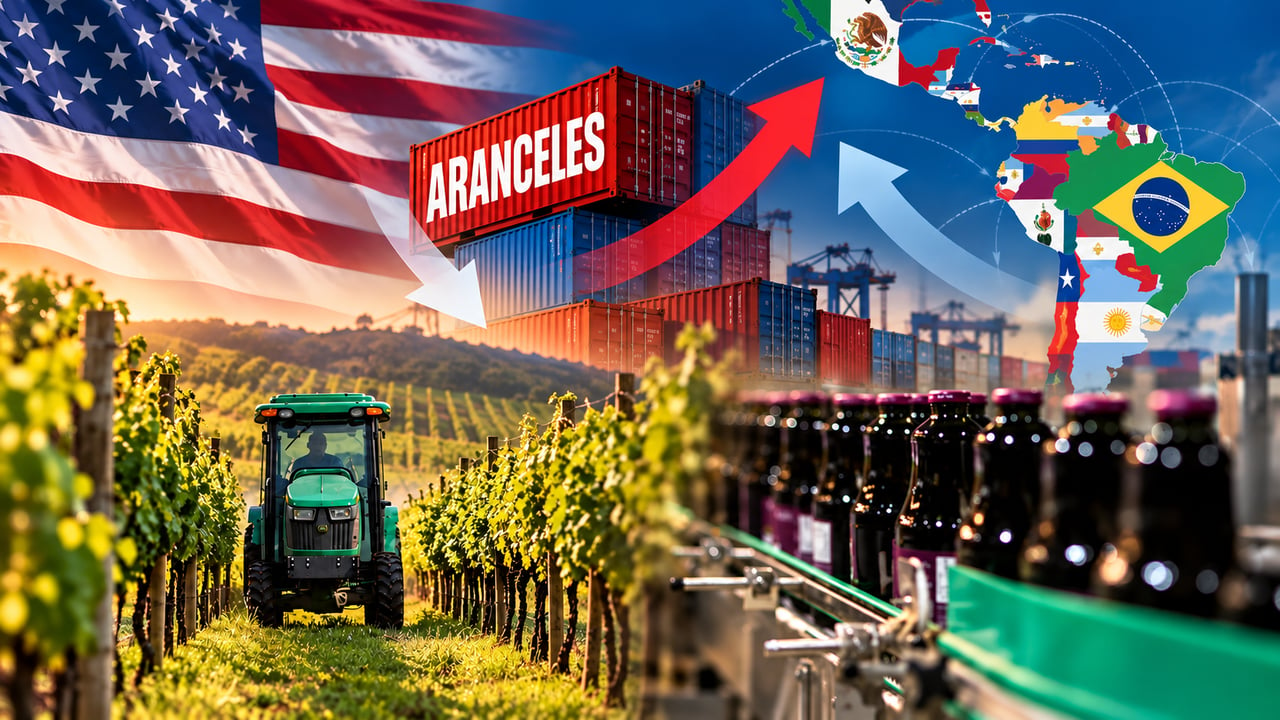
Haiti and Brazil face the highest US tariffs on their exports among Latin American and Caribbean countries, according to the report «International Trade Outlook for Latin America and the Caribbean 2026» by the Economic Commission for Latin America and the Caribbean (ECLAC). The organization’s executive secretary, José Manuel Salazar-Xirinachs, presented the report in Santiago on Thursday, October 15, 2026, and Bloomberg Línea covered the findings on Monday, October 19.
- As of July 24, 2026, the weighted average tariff was 20.9% for Haiti and 16.6% for Brazil, compared with a global average of 11.1%.
- The lowest tariffs apply mostly to Caribbean countries and those that have signed «reciprocal trade agreements» with the US.
- Mexico faces an average tariff of 6.5%, below the overall US average.
Why it matters: US importers pay tariffs, and some of those costs may be passed on to consumers through higher store prices. Tariffs can also affect exporters in countries where many Latino readers have family members.
US Tariffs on Latin America: Rates From Haiti to Venezuela
According to ECLAC, these were the weighted average US tariffs as of July 24, 2026:
- Haiti: 20.9%
- Brazil: 16.6%
- Uruguay: 11.9%
- Dominican Republic: 10.4%
- Peru: 8.9%
- Argentina: 8.6%
- Costa Rica: 8.4%
- Honduras: 7.3%
- Nicaragua: 7.2%
- Paraguay: 7.1%
- Chile: 6.9%
- Mexico: 6.5%
- Colombia: 5.8%
- Ecuador: 4.1%
- Guatemala: 3.6%
- El Salvador: 3.3%
Countries facing tariffs below 1% include Bolivia, Panama, Jamaica, Venezuela, Trinidad and Tobago, and several Caribbean islands. Regarding Brazil, ECLAC noted: «Among the 30 main US suppliers, only China faces a higher tariff than Brazil (26.8%).»
There were significant changes compared with July 21: Brazil’s rate rose from 10.3% to 16.6%, while Haiti’s fell from 30.7% to 20.9% and Paraguay’s dropped from 12.8% to 7.1%.
How the New US Tariff System Developed
On February 20, 2026, the US Supreme Court declared unconstitutional the «reciprocal tariffs» imposed in April 2025 under the International Emergency Economic Powers Act (IEEPA) of 1977. According to ECLAC, the Trump administration replaced them with a uniform 10% tariff under Section 122 of the Trade Act of 1974, which allows tariffs to be increased for up to 150 days to address balance-of-payments problems. You can review the scope of this measure in our explanation of the 10% tariff on Mexico and 59 other countries.
On June 2, the Office of the US Trade Representative (USTR) concluded that none of the countries investigated had effectively enforced the ban on imports of goods made with forced labor. In July, Trump imposed tariffs of up to 12.5% on 60 countries on that basis. The tariffs took effect on July 24, hours before the temporary 10% tariff expired. Exemptions applied to goods that the US does not produce in sufficient quantities or considers strategically important.
The Brazilian government responded in a statement cited by Bloomberg Línea that the US was using forced labor as a pretext «in the absence of a domestic legal basis to support its protectionist trade policy.»
Reciprocal Trade Agreements and Political Factors
Argentina, Ecuador, El Salvador, and Guatemala signed «reciprocal trade agreements» and secured a 10% tariff instead of 12.5%. In exchange, they committed to reducing or eliminating tariffs on US products, modifying regulations on technical standards, intellectual property, and digital trade, and facilitating US investment in critical minerals and infrastructure. ECLAC warns that «several provisions of these agreements seek to reduce the space for China’s economic presence in partner countries.»
According to ECLAC, Trump’s strategy «is to rebuild – on a more solid legal basis – the existing tariff structure before the Supreme Court ruling, characterized by the application of different tariff levels to different partners.» The organization adds that this approach could become clearer once the results of an investigation into industrial overcapacity among several trading partners are released.
Politics also plays a role. According to Bloomberg Línea, on Monday, October 12, Trump opened the door to removing tariffs on Colombia, citing his positive relationship with President Abelardo de la Espriella. In Mexico, tariffs are already complicating the bilateral trade agenda, as we reported in the tariffs that complicate negotiations with Mexico.
The trade at stake is substantial: in 2025, the US imported $705 billion in goods from the region and exported $549 billion, resulting in a $156 billion deficit driven by Mexico, according to ECLAC. Meanwhile, according to the Latinobarómetro survey cited by Bloomberg Línea, 59% of Latin Americans disapprove of Trump’s handling of international affairs, while 34% approve. In Mexico, disapproval reaches 79%.
What US Tariffs on Latin America Mean for You
- Prices: Because US importers pay tariffs, some of the costs may be passed on to consumers through products such as coffee, meat, or orange juice from Brazil, all major Brazilian exports. The actual impact depends on the company and product.
- Family or business in Haiti or Brazil: Exporters in these countries face the highest average tariff rates in the region, which could affect sales, employment, and local incomes.
- Mexico and Central America: These countries face lower tariff rates than the global average, although conditions could change as new investigations and trade negotiations proceed.
Sources: CEPAL, Perspectives on International Trade in Latin America and the Caribbean 2026 (presentation); CEPAL, United States-Latin America and the Caribbean Trade Developments 2026; Bloomberg Línea. Data consulted on October 19, 2026.