Sheinbaum Rejects Trump’s Threat to Double Tariffs on Mexico Over Migrant Caravans


Posted on 11/13/26 at 07:01
- Trump threatens to double tariffs on Mexico
- Sheinbaum denies caravans have reached the border
- Mexico seeks trade agreements with Washington
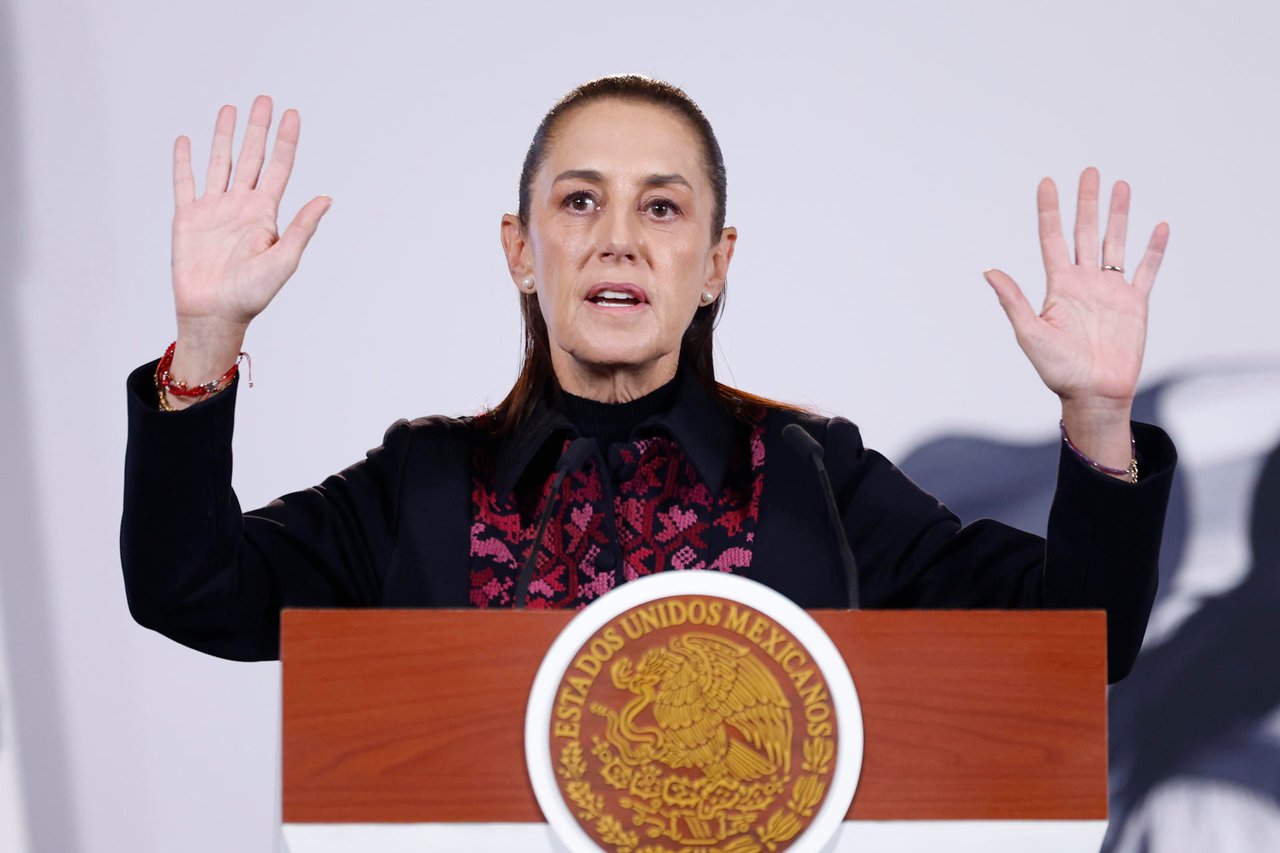
Sheinbaum responds to Trump. Mexico’s president, Claudia Sheinbaum, on Thursday, November 12, rejected warnings from Donald Trump that he would double tariffs on the country if it does not stop the advance of migrant caravans toward the United States.
During her morning press conference, the president said no caravan has reached the northern border since the Republican returned to the White House in January 2025.
“Since President Trump took office, no migrant caravan has reached the northern border,” Sheinbaum said, according to statements gathered by the news agency EFE.
Her response comes after Trump threatened to “immediately” double tariffs on Mexico if authorities do not stop what he described as “enormous caravans” seeking to enter U.S. territory.
The U.S. president said his warning has already been communicated to the Mexican government, although he did not specify which duties would be affected or how the increase would be applied.
Sheinbaum Responds to Trump… How Many Migrants Are Currently Moving Through Mexico?
Sheinbaum acknowledged that there are two migrant caravans in the south of the country, but she maintained that authorities are in contact with the people in them to explain the restrictions on entering the United States.
One of them is in Arriaga, Chiapas, and originally included between 500 and 600 people. According to the president, it now has fewer than 100 participants.
“The vast majority return to their home countries once they learn that (…) they will not be able to cross the Mexican border into the United States,” the president explained.
She also reported on another caravan coming from Honduras, whose members are receiving humanitarian assistance and guidance on their immigration options, including the possibility of staying in Mexico under certain conditions.
According to EFE, this second group brought together approximately 2,000 migrants, mostly Central Americans, and set out from Tapachula on Tuesday, November 10.
Tariffs Complicate Negotiations Between Mexico and the United States
Trump’s threat comes as both governments hold talks to reduce U.S. tariffs affecting Mexican products, including steel.
Sheinbaum’s government hopes to reach an agreement before the end of 2026, amid trade and immigration pressure from Washington.
Since returning to the presidency, Trump has used tariffs as a bargaining tool with Mexico, its main trading partner.
Sheinbaum Prepares Meetings With China and Canada
Meanwhile, Economy Secretary Marcelo Ebrard confirmed that Sheinbaum will attend the Asia-Pacific Economic Cooperation (APEC) forum summit, scheduled for November 17–19 in Shenzhen, China.
The president will hold bilateral meetings with Chinese President Xi Jinping and with representatives of Canada, Vietnam and Australia, EFE reported.
Her agenda will include promoting Plan México to attract investment and exploring cooperation on solar technology, smart hospitals and renewable energy.
“The goal of Plan México is to produce more in Mexico and import less,” Sheinbaum explained.
The president made clear that Mexico is not seeking to sign a free trade agreement with China, because of its existing commitment to the United States and Canada under the USMCA.