Nearly 100 Earthquakes Strike Kīlauea: Tourist Areas Closed as Next Eruptive Episode Remains Uncertain


Posted on 10/04/26 at 06:58
- Nearly 100 earthquakes struck beneath Kīlauea.
- Keanakākoʻi experienced safety-related closures.
- The next eruptive episode remains uncertain.
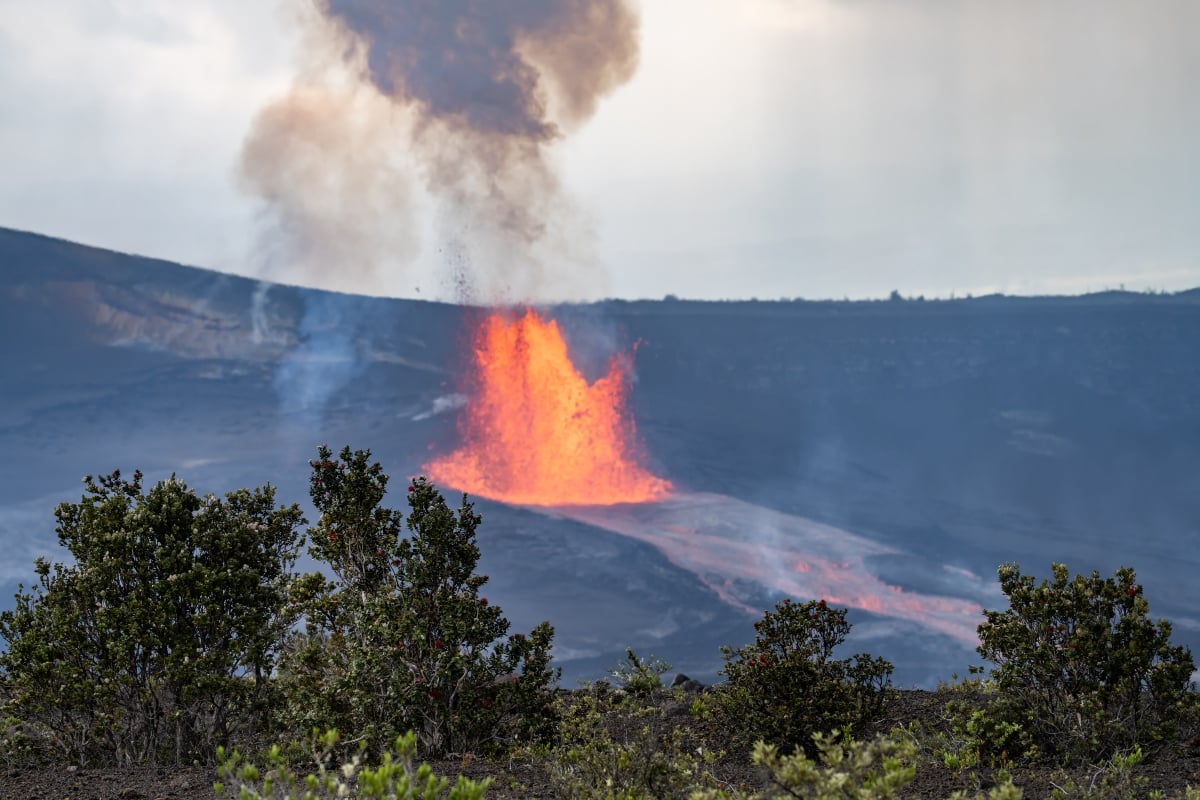
A swarm of 98 earthquakes shook the summit region of Kīlauea Volcano, prompting precautionary closures in Hawaii Volcanoes National Park.
Seismic activity was recorded during the 24 hours before the notice issued by park authorities on Thursday, October 1.
The largest earthquake in that period reached a magnitude of 3.4, shortly before 10 p.m. local time on Wednesday. The activity was associated with a shallow magma intrusion near the existing eruptive area, according to reports from the Hawaiian Volcano Observatory.
Which park areas are closed for safety
SHAKING UP : Kīlauea is keeping scientists on their toes. Nearly 100 earthquakes rattled beneath the volcano’s summit, with the strongest reaching magnitude 3.4. Have you ever visited an active volcano? Would you hike one, or admire it from a safe distance? Tell us in the… pic.twitter.com/cbdZIL2T6i
— FOX Weather (@foxweather) October 2, 2026
Temporary closures affect the Keanakākoʻi area, frequently visited by tourists exploring the volcanic landscapes of the Big Island of Hawaii.
The restrictions include Old Crater Rim Drive and the overlooks near Keanakākoʻi Crater, as well as access via Crater Rim Trail.
The Devastation Trail parking lot remained open, according to the initial notice, so the measure does not mean the entire park is closed.
For residents and tourists alike, distinguishing between restricted and open areas is essential before traveling or planning a hike.
Seismic activity decreased, but volcanic monitoring continued.
An intrusion shook Kīlauea’s summit last night, September 30.
⁰Dozens of earthquakes, rapid ground deformation, and shifting activity beneath Halemaʻumaʻu showed that magma was making a new path underground.
⁰Scientists are watching closely and on an overflight this morning,… pic.twitter.com/6Y6HJN9ypi— USGS Volcanoes (@USGSVolcanoes) October 2, 2026
The most intense phase of the intrusion occurred between 8 p.m. on Wednesday and 3 a.m. on Thursday.
Afterward, the measured deformation at the summit stabilized, and seismic activity decreased, according to information released by the park.
However, the USGS bulletin on Friday, October 2, reported that earthquakes continued beneath Halemaʻumaʻu, within the summit region.
That day, a magnitude 3.5 movement was recorded, distinct from the 3.4 magnitude earthquake cited in the initial report.
Kīlauea’s episode 55 still lacks a certain date
The USGS maintains the possibility of a new lava-source episode, identified as number 55 in the ongoing eruption.
But the Friday update explained that irregular changes in deformation make it impossible to calculate a reliable window for its start.
An overflight on Thursday did not find new fissures or evidence of erupting lava at a different location.
YOU MAY BE INTERESTED IN: Rachel reaches category 3: moving away from land does not eliminate the risk in the Pacific
No anomalous activity was detected outside the summit. Scientists warn, however, that conditions can change rapidly.
What visitors should review before traveling
Precautionary closures must be respected, even if no lava, new fissures, or obvious signs of danger are visible from an overlook.
Those planning to visit the park should consult the National Park Service alerts and USGS bulletins before departing.
Official cameras allow monitoring of activity from a distance and observation of the summit’s appearance without entering restricted areas.
A decrease in earthquakes does not mean a reopening: visitors must wait for the corresponding notice before returning to closed areas.
SOURCE: foxweather