ICE Raids Deepen Construction Labor Shortage as Atlanta Loses 5,100 Jobs


Posted on 11/10/26 at 19:15
- ICE raids worsen labor shortages in the construction industry.
- Construction companies face project delays and rising costs.
- Even workers with legal immigration status fear enforcement operations.
ICE raids are worsening labor shortages in the US construction industry. Leo Cárdenas, a Venezuelan contractor based in Dunwoody, Georgia, has lost his entire workforce in recent months. Most of his employees, including his stepfather, returned to their home countries after being deported or choosing to leave voluntarily amid President Donald Trump's immigration crackdown.
Cárdenas, the father of a baby girl just a few months old, has had to "reinvent" himself to keep his small business running without employees. He also fears becoming a target of US Immigration and Customs Enforcement (ICE) agents, despite having legal immigration status.
"This situation is unsustainable," Cárdenas told EFE. He even had to sell his white work truck, a type of vehicle he says has become a particular target for immigration enforcement agents.
Like Cárdenas, thousands of construction contractors are struggling to find workers. The Atlanta metropolitan area lost approximately 5,100 construction jobs between September 2025 and September 2026, the largest decline among US metropolitan areas, according to the Associated General Contractors of America (AGC). The losses occurred amid immigration enforcement operations, rising costs, and broader uncertainty in the construction industry.
ICE Raids Leave Construction Workers Afraid to Report to Work
[caption id="attachment_1700401" align="alignnone" width="1200"]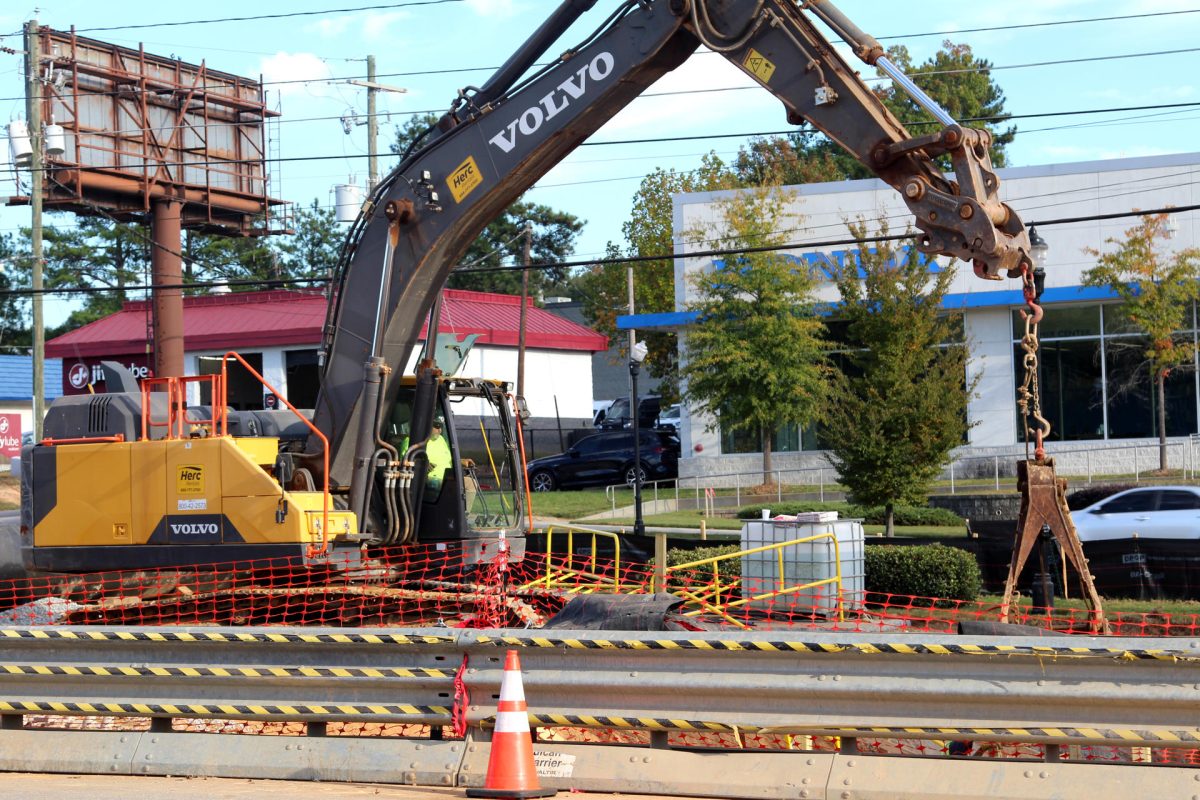 ICE Raids Deepen Construction Labor Shortage as Atlanta Loses 5,100 Jobs - Photo from October 27, 2026, showing a crane parked at a stalled construction site in the Atlanta, Georgia area (USA). Thousands of construction contractors are facing difficulties finding workers, in a sector that lost around 5,100 jobs between September 2025 and September 2026 in the Atlanta metropolitan area, the most affected in the country in a context marked by ICE raids, according to surveys by the Associated General Contractors of America (AGC). EFE/Gabriel DeFranco[/caption]
"The impact is real. According to AGC, worker shortages are now the leading cause of construction project delays. That translates into higher costs and longer timelines," Gabriela Matute, executive director of the Georgia Hispanic Contractors Association (GHCA), told EFE.
Matute explained that the labor shortage "is not a new phenomenon, but a cyclical one." However, she acknowledged that uncertainty surrounding ICE operations "affects the entire Hispanic community, and construction is no exception."
"Our industry feels it particularly strongly because, for decades, construction has been the entry point for generations of Hispanic immigrants: the place where they learned a trade, built a reputation, and, through years of hard work, eventually started their own businesses. Many of the entrepreneurs creating jobs in Georgia today began exactly that way," she said.
The GHCA executive director added that even workers with legal immigration status and US citizens have been staying away from job sites because they prefer not to expose themselves or their families to potential immigration enforcement operations.
In addition to ICE operations, AGC identifies rising material costs, high interest rates, and political uncertainty as factors discouraging investment and delaying new construction projects.
Construction Labor Shortage Affects Companies Nationwide
According to AGC, the construction labor shortage remains severe nationwide. After Atlanta, other metropolitan areas experiencing substantial job losses include parts of New York and New Jersey, Oakland and Riverside-San Bernardino in California, and Lakewood-New Brunswick in New Jersey. Other affected markets include Pittsburgh, Sacramento, Arlington, San Diego, and Corpus Christi.
The association reports that construction companies continue to struggle to recruit and retain qualified workers, partly because the growing demand for employees to build data centers is increasing competition for skilled labor.
Immigration enforcement has also affected workforce availability, with approximately 29% of surveyed construction companies reporting at least one direct or indirect impact during the previous six months.
The AGC survey found that 87% of responding companies had vacancies for skilled construction workers, while 82% reported openings for salaried positions, highlighting the industry's persistent staffing challenges.
Additionally, 42% of respondents reported construction project delays caused by shortages among their own employees or subcontractors' workers, according to the 2026 workforce survey conducted by AGC and the National Center for Construction Education and Research (NCCER), which received responses from 1,830 construction companies.