El Niño Could Reach Historic Intensity: What NOAA Expects for the Next Few Months



Posted on 11/16/26 at 14:40
- El Niño continues to gain intensity.
- Its effects would continue into 2027.
- La Niña does not yet predominate.
El Niño continues to intensify and could reach a historic magnitude, according to the November 12 update from the NOAA’s Climate Prediction Center.
The agency calculates around a 60% probability that it will exceed the threshold associated with the most intense episodes recorded since 1950.
Although it already reaches the category of very strong intensity, that does not mean it has reached its peak or will begin to weaken immediately.
The NOAA forecasts that it will continue to strengthen before losing intensity at the beginning of 2027, with consequences that could last beyond the oceanic peak.
When It Would Reach Its Peak and How Long It Would Last
The National Weather Service predicts a “strong-to-very-strong” El Niño in the coming months.
Read more: https://t.co/5Huzoo98Y0 https://t.co/Ag4QtaBUr8
— KTLA (@KTLA) November 14, 2026
The period of greatest intensity is expected between late 2026 and early 2027, particularly during the October-December and November-January quarters.
These intervals correspond to three-month averages used to evaluate the phenomenon, not a specific date on which its peak will occur.
For January-March 2027, the forecast maintains a probability of over 79% that El Niño will conserve an intensity between strong and very strong.
After that, the options for weakening increase: between April and June, there is a 61% probability of neutral conditions and a 38% chance of El Niño continuing.
How the Winter in the United States Could Change
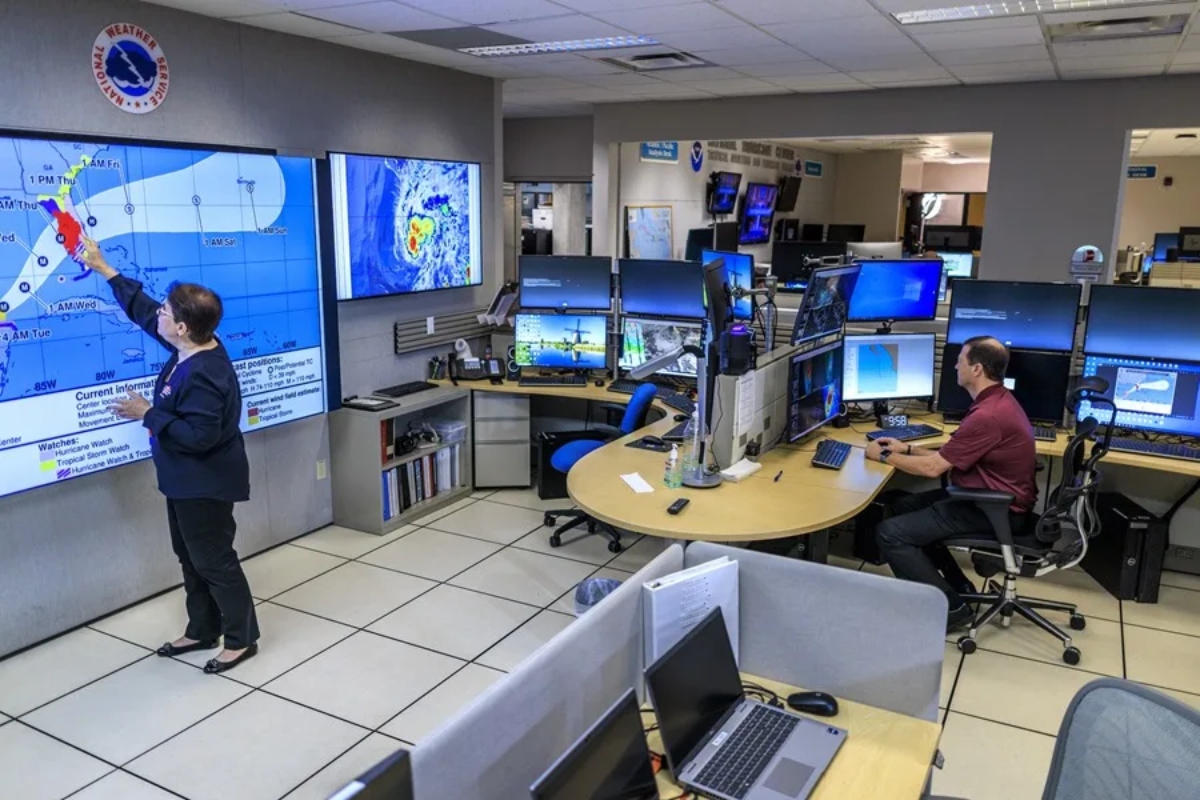
The NOAA’s winter outlook favors above-average precipitation in the southern United States, from California to Florida, and along the East Coast.
In the northern part of the country, the probabilities lean towards higher-than-usual temperatures, although episodes of cold and storms can occur.
Rain could alleviate drought areas in the Southwest, the Southern Great Plains, and sectors of the Southeast, according to official forecasts.
The forecast describes seasonal trends: it does not determine how many storms each city will receive or guarantee that the entire winter will follow a uniform pattern.
Why Its Effects Can Extend Throughout 2027
El Niño arises from the abnormal warming of the central and eastern equatorial Pacific, accompanied by atmospheric changes that redistribute rainfall and temperatures over long distances.
The World Meteorological Organization warns that this episode can increase the risks of extreme heat, droughts, and floods, with significant differences between regions.
Its influence on global temperature can be more marked during the year following its development, even when oceanic warming begins to decrease.
YOU MAY BE INTERESTED: Texas expects intense rain: relief from drought, but risk on roads in Dallas and Houston
However, the intensity of the phenomenon does not alone determine the severity of the damage: other climate patterns and local conditions also intervene.
La Niña Is Possible, but Does Not Yet Predominate
The NOAA assigns a 33% probability to the development of La Niña between June and August 2027, the far end of the available official horizon.
For that same quarter, neutral conditions remain the most likely scenario, with a 61%; therefore, a transition to La Niña is not assured.
It is also not appropriate to define the 2027 hurricane season solely based on that possibility: its evolution will depend on several oceanic and atmospheric factors.
To prepare, families should consult the National Weather Service’s warnings and adjust their plans in the face of local flood, snow, or extreme temperature alerts.
SOURCE: USATODAY ,