Treasury Secretary Says Deportations Leave Jobs for Americans: Do You Agree?


Posted on 08/21/26 at 12:19
Scott Bessent argues that the U.S. needs to create fewer jobs because of the decline in immigrant workers, while economists question the impact on economic growth.
Treasury Secretary Scott Bessent said the United States “doesn’t need to generate as many jobs” following the deportations carried out under President Donald Trump’s administration.
- Why it matters: His argument raises an economic and political question: Do fewer immigrants mean more opportunities for Americans, or do they also mean an economy with fewer workers?
Bessent Links Deportations and Jobs to Changes in the Labor Market
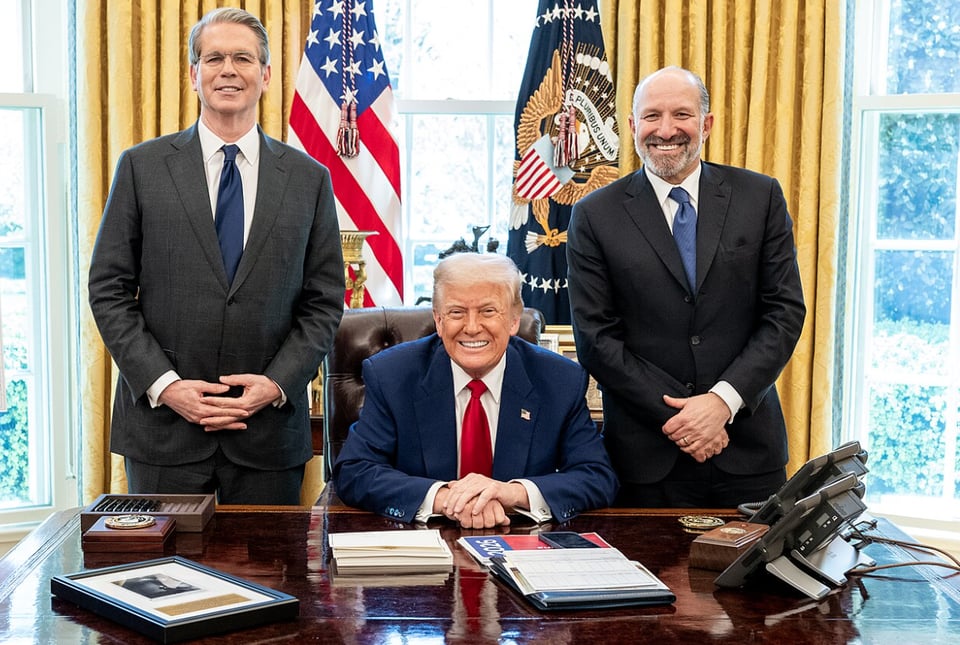
During an interview with CNBC, Bessent directly linked Trump’s immigration policies to the current needs of the labor market.
“After the deportations we’ve seen during President Trump’s administration and the closing of the border… we don’t need to generate as many jobs,” he said.
The secretary argued that positions available following the decline in immigrant workers are being filled by American workers.
- His argument: “The jobs we’re seeing are for Americans,” Bessent said.
However, that statement alone does not prove that immigrants who were deported are being directly replaced by U.S.-born workers.
The Bureau of Labor Statistics (BLS) itself notes that its surveys cannot identify the legal status of foreign-born workers.
United States Lost 23,000 Jobs in July
The remarks come after a weak employment report. Nonfarm payrolls declined by 23,000 jobs in July.
The unemployment rate stood at 4.1%, while the labor force participation rate was 61.4%, according to the BLS.
- The data: The civilian labor force fell by 264,000 people between June and July, while the number of employed people declined by 87,000.
This helps explain Bessent’s argument: A smaller labor force may require fewer new jobs to keep the unemployment rate stable.
But that reasoning alone does not determine whether deportations and jobs are connected in a way that benefits American workers.
Bessent also highlighted what he described as a manufacturing “renaissance.” The BLS recorded an additional 5,000 jobs in that sector in July.
Economists Question Who Is Really Benefiting
Dean Baker, senior economist at the Center for Economic and Policy Research, challenged the secretary’s interpretation.
According to EFE, Baker noted that the employment rate among U.S.-born workers had fallen by one percentage point compared with the period under Joe Biden.
Aaron Reichlin-Melnick of the American Immigration Council raised another criticism: He interpreted Bessent’s comments as an acknowledgment that deportations can shrink the economy.
- The dispute: Fewer workers can reduce the number of jobs that need to be created, but they can also limit the economy’s capacity for production and growth.
That distinction is central to the debate. Having fewer people looking for work does not automatically mean that American workers are getting the jobs previously held by deported immigrants.
Deportations and Jobs Fuel a Broader Debate Over Economic Growth
Bessent presents reduced immigration as an explanation for why the United States can function while creating fewer jobs.
His critics view the same phenomenon from another perspective: If the number of workers and jobs decline simultaneously, the economy’s potential size could also shrink.
- The question: Are deportations opening up employment opportunities for Americans, or are they reducing both the workforce and economic growth?
Upcoming employment reports will provide more information about how jobs and labor force participation are evolving, although those figures alone will not prove a direct relationship with deportations.
- The debate remains open: While Bessent presents deportations as an employment opportunity for Americans, his critics warn that a smaller labor force could also mean weaker economic growth.
You May Be Interested: Marco Rubio defeats Kamala Harris by 5 points: poll strengthens him against Vance for 2028
SOURCE: EFE / BLS.Gov / Fortune