Newsom Imposes New Restrictions on Military Deployments in California Ahead of Elections


Posted on 09/20/26 at 13:30
- California restricts out-of-state troops
- Newsom must authorize deployments
- Title 10 is exempt
California has established a new legal barrier to prevent military forces from other states from entering the state without the authorization of Governor Gavin Newsom.
The measure comes just weeks before the November midterm elections and amid new tensions between California and the Trump administration.
The law, SB 1354, prohibits military personnel from another state, territory, or Washington D.C. from performing military or police duties in California without the governor’s authorization.
However, there is a key exception: the restriction does not apply to forces activated under federal authority through Title 10.
Newsom Limits National Guard Deployments in California
Newsom blocks other states’ National Guard troops from California https://t.co/Pbau80aTyn
— USA TODAY Politics (@usatodayDC) September 19, 2026
The legislation seeks to specifically close the possibility of another governor sending their National Guard to California under state authority without Sacramento’s consent.
Under Title 32, National Guard members remain under the control of their governor, although Washington can fund certain missions.
In contrast, when they are federalized under Title 10, they come under federal command, a situation that is exempt from the prohibition established by SB 1354.
Newsom stated that the National Guard should be used to serve the population and maintained that the new legislation protects California’s authority.
November Elections Increase Tension Between Newsom and Trump
I just enacted a new law PROHIBITING other state militaries from entering California unless they have EXPLICIT permission from the Governor.
California will defend the rights of the nearly 40 million people who call our state home.
— Governor Gavin Newsom (@CAgovernor) September 19, 2026
The signing comes alongside other electoral measures driven by California amid concerns expressed by state authorities about possible federal intervention during the elections.
Newsom’s office maintains that Trump has threatened to send federal agents to polling stations, an argument used to justify new electoral protections.
YOU MAY BE INTERESTED: Trump anticipates a «depression» if Democrats win: this happened with Biden
California has also approved measures on electoral security, voting materials, language access, and permitted activities around polling stations.
Statements about possible interference are positions of the Newsom administration; SB 1354, by itself, primarily regulates the entry of military forces under the control of other states.
The Precedent of the National Guard in Los Angeles
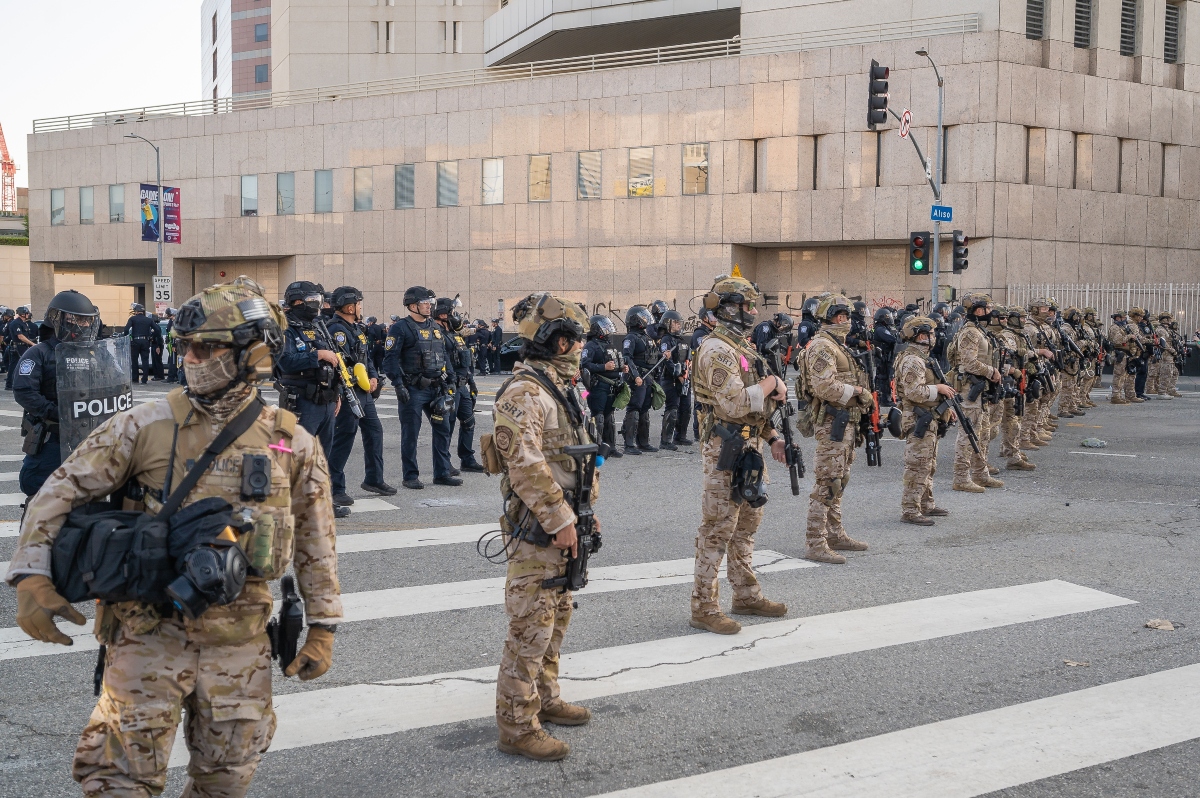
The dispute has a direct precedent: in June 2025, Trump ordered the initial federalization of at least 2,000 members of the California National Guard.
Subsequently, the Secretary of Defense mobilized 4,000 members for Los Angeles during protests linked to federal immigration operations.
Newsom took that intervention to court, opening a dispute over the limits of presidential authority to federalize and use the National Guard.
In December 2025, a federal court ordered the federalization to end and control of the troops to be returned to Newsom, although the litigation had different stages and appeals.
What SB 1354 Can and Cannot Prevent
The scope of the new law is decisive: California can require authorization for forces that remain under the command of governors of other states.
However, SB 1354 does not eliminate existing federal powers nor automatically prevent a deployment made legally under Title 10.
This limitation anticipates that any new confrontation over federalized forces will depend on the authority invoked by Washington and potential judicial disputes.
Thus, California strengthens its control over interstate deployments while the National Guard returns to the center of the debate over security, state authority, and elections.
Sources: USA Today, Gov.ca.gov