Maine Becomes a Sanctuary State and Limits Cooperation with ICE


Posted on01/15/26 at 12:33
- Maine Limits Cooperation With ICE
- Law Takes Effect
- State Declares Itself a Sanctuary
According to the news agency EFE, the state of Maine will join the list of Democrat-governed jurisdictions that limit cooperation with the U.S. Immigration and Customs Enforcement (ICE) starting in mid-2026.
The measure will take effect after a legislative bill became law without the signature of Governor Janet Mills, according to information released Tuesday by the ACLU.
The legislation restricts the use of state and local resources to support the mass deportation agenda promoted by former president Donald Trump.
Although the bill was approved in June 2025, it officially became law this past weekend due to the governor’s inaction, as she chose not to veto it.
According to the ACLU, the law will begin to be enforced 90 days after the end of the legislative session, which is scheduled for mid-April.
A Law That Limits Cooperation With ICE
 The new legislation clarifies and redefines the role of state and local law enforcement when dealing with federal immigration authorities.
In practical terms, it prohibits police departments and local agencies from participating in federal immigration enforcement activities.
The restrictions include banning the investigation, questioning, detention, or search of individuals for the purpose of enforcing federal immigration laws.
The law also prevents local authorities from holding individuals solely based on ICE requests.
YOU MAY BE INTERESTED IN: Congress Debates Measures Against ICE After Minnesota Killing
Additionally, it prohibits the use of federal immigration officers for translation services.
Other activities related to federal immigration enforcement are also explicitly limited.
According to the ACLU, these provisions effectively turn Maine into a sanctuary state, aligning it with other jurisdictions that have chosen to restrict collaboration with ICE.
The organization emphasized that the law seeks to prevent state resources from being used to support federal deportation operations.
Political Context and National Protests
 The advancement of this law comes amid heightened national tension surrounding immigration policies.
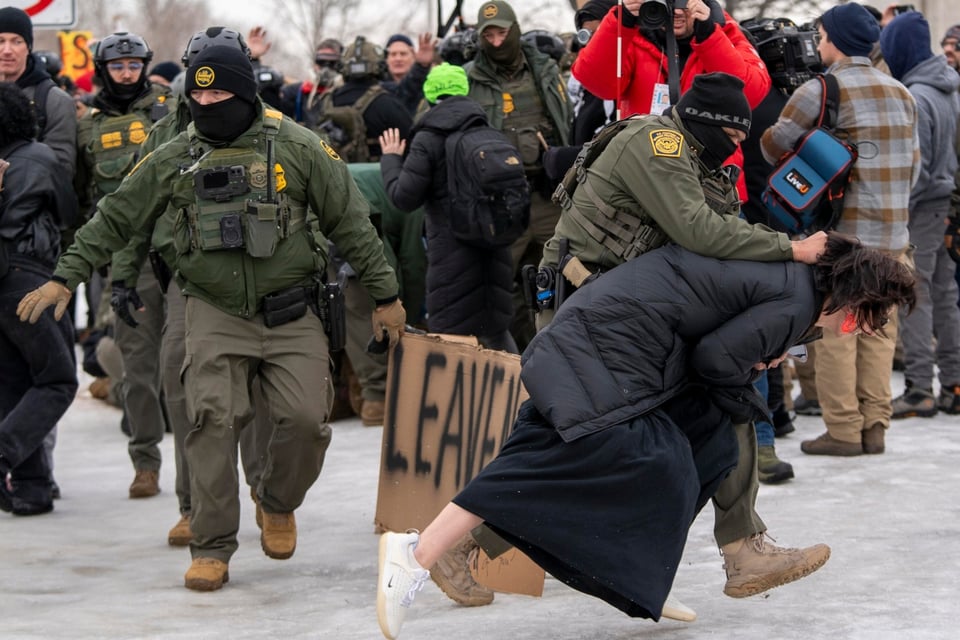
Governor Janet Mills’ inaction coincided with nationwide protests following the killing of Renee Good, a U.S. protester, during an ICE operation in Minneapolis.
Although Maine’s legislation is not directly linked to that case, the political climate influenced public debate over cooperation with federal immigration authorities.
The ACLU noted that throughout 2025 it identified widespread use of local resources to support federal immigration enforcement.
This conclusion followed a review of numerous public records requests across multiple localities in the state.
According to the organization, such use of local resources raised concerns about potential abuses of power.
The new law aims to establish clear limits on that type of collaboration.
Legal Scope and the ACLU’s Position
 The ACLU emphasized that the legislation does not prevent Maine law enforcement agencies from complying with existing federal law.
Nor does it affect their ability to investigate crimes or execute or respond to judicial warrants.
The organization stressed that the goal is to separate public safety functions from federal immigration enforcement duties.
In a statement, Michael Kebede, policy director of the ACLU of Maine, explained that the law is intended to protect local communities.
“This new law will ensure that Maine’s cities and towns are not complicit in or responsible for federal abuses of power,” Kebede said.
He also stated that the measure will improve public safety by strengthening trust between local law enforcement and the communities they serve.
According to the ACLU, distrust generated by cooperation with ICE has damaged relationships between authorities and residents.
The new regulation aims to reverse that dynamic.
With its entry into force later this year, Maine will formally join the group of states that have chosen to limit cooperation with ICE, amid an increasingly polarized national debate over immigration, security, and civil rights.