Breathing in Four Steps: The Stress-Relief Technique Gaining Scientific Backing


Publicado el29/08/2026 a las 08:45
- Helps control stress
- Practiced in four steps
- Study analyzes its effects
Stress can appear before an important meeting, during a sleepless night, or when a situation is completely out of our control, but an extremely simple breathing technique is gaining attention for its ability to help the body manage those moments.
It’s known as «box breathing» or «square breathing,» an exercise based on four stages of equal duration that aims to regulate breathing consciously and can be practiced almost anywhere without equipment or special preparation.
A Simple Technique to Regain Calm
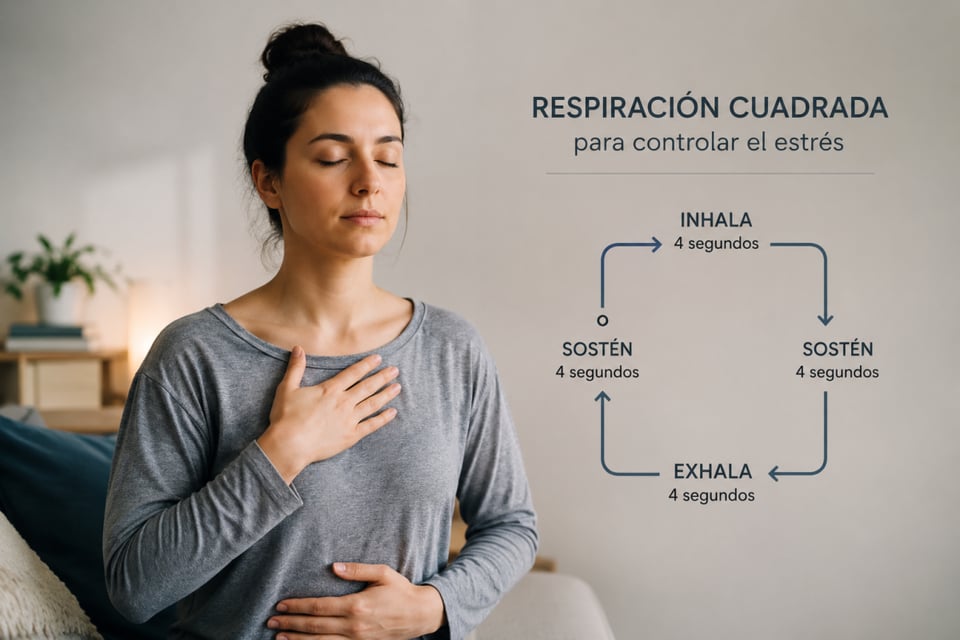
The technique is not new, but a recent study by researchers from Texas State University and the University of Toronto Mississauga found promising results regarding its effect in high-pressure situations, according to a BBC report.
The finding is especially relevant because it suggests that deliberately controlling breathing could help limit certain physical changes associated with stress, such as pronounced increases in heart rate.
How Does Square Breathing Work?
The procedure seems simple because it uses four consecutive steps, and traditionally each one lasts four seconds, although the duration can be adjusted as long as the four phases maintain the same duration.
- Inhale for four seconds.
- Hold your breath for four seconds.
- Exhale for four seconds.
- Wait another four seconds without inhaling.
After that, you simply return to the first step and repeat the cycle for several minutes.
Respiratory technique specialist Stuart Sandeman explained to the BBC that some people may notice its effects after a few minutes, while others may need to practice the exercise for up to 15 minutes.
Controlled breathing has its roots in traditional practices like yoga and has also been part of disciplines like martial arts for centuries. However, these techniques have now found new spaces in sports, therapy, and everyday stress management.
Sandeman notes that even members of the US Navy SEALs have used square breathing before facing hostile situations. At the same time, he himself has taught breathing techniques to members of the English national football team.
The Fourth Step Could Be the Key
One of the most interesting aspects is precisely the moment that is probably the most uncomfortable: the pause after expelling the air.
Dr. Helen Garr, who works with doctors and nurses facing mental health problems, explained to the BBC that she recommends this technique to numerous patients and believes that the last pause produces one of the most important physiological changes in the exercise.
During that period, carbon dioxide (CO2) levels vary, which can progressively create the need to breathe again.
The idea is that practice helps the body become more accustomed to variations in CO2 and the sensations that may accompany them, which is relevant because the respiratory pattern also changes when a person is under stress.
A study published in June 2026 in Comprehensive Psychoneuroendocrinology provides additional evidence: the researchers found that square breathing could help avoid large increases in heart rate and other bodily indicators of stress when participants faced high-pressure situations.
This does not mean that breathing for a few minutes eliminates the causes of stress or replaces professional attention when a problem is persistent. Still, it offers an accessible tool to help control some of the body’s immediate responses.
From Insomnia to Starting the Day with Less Anxiety
For María Medina, a 31-year-old Venezuelan living in Florida, the technique became precisely a tool to face particularly difficult nights.
After the devastating earthquakes that hit her hometown of La Guaira, Medina was over 1,500 miles away, worried about family and friends, and feeling that she could do little from the United States
es.
When she lay in bed staring at the ceiling, unable to sleep, she would use square breathing to try to regain calm.
Medina had learned the technique in 2020, when she was combining master’s studies with a full-time job and seeking help from a therapist as the COVID-19 pandemic began.
Her experience is not isolated. Brittany Lamm, 28, from California, told the BBC that she uses square breathing every morning after waking up and also incorporates it into sessions with her clients as a life coach.
For her, deliberate breathing before starting the day helps to direct attention to the body and prevent thoughts related to anxiety from conditioning her immediate activities
ly.
A Simple Tool, But Not a Universal Solution
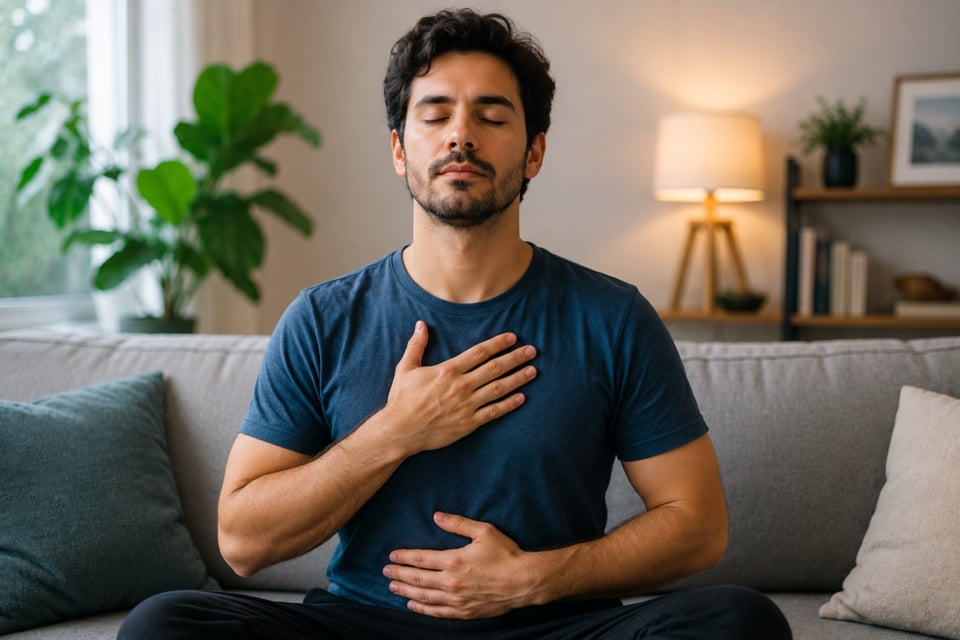
The appeal of square breathing lies in the fact that it doesn’t cost money, requires only a few minutes, and can be practiced before a stressful situation, from an exam or presentation to an emotionally difficult conversation
on.
It also has a practical advantage: it doesn’t require exactly four seconds. The fundamental principle is to keep the four phases equal, so that a person can adjust the duration to their comfort.
However, positive experiences do not mean the technique works the same for everyone. It also should not be presented as a cure for anxiety, insomnia, or mental health disorders.
Instead, the evidence points to a complementary way to manage immediate stress. It may be especially useful when someone needs to regain focus and a sense of control. Medina’s experience reflects that benefit. She still has difficult nights, but now she has a concrete tool to manage overwhelming moments.
What You Need to Know
- What it is: controlled breathing in four equal phases.
- How to practice it: inhale, hold, exhale, and wait.
- How long: from a few minutes to about 15.
- When to use it: before or during stressful moments.
- What science says: it can moderate physical responses to stress.
- What it doesn’t do: it doesn’t replace medical or psychological treatment.
You May Be Interested In: Can the risk of Alzheimer’s and dementia be reduced during menopause? What a new study reveals
Warning: This information is for educational purposes and does not replace the evaluation or recommendation of a health professional.
SOURCE: BBC. Cited study: Texas State University and University of Toronto Mississauga, published in Comprehensive Psychoneuroendocrinology in June 2026.