What Happens to Salvadorans After TPS Ends September 9?
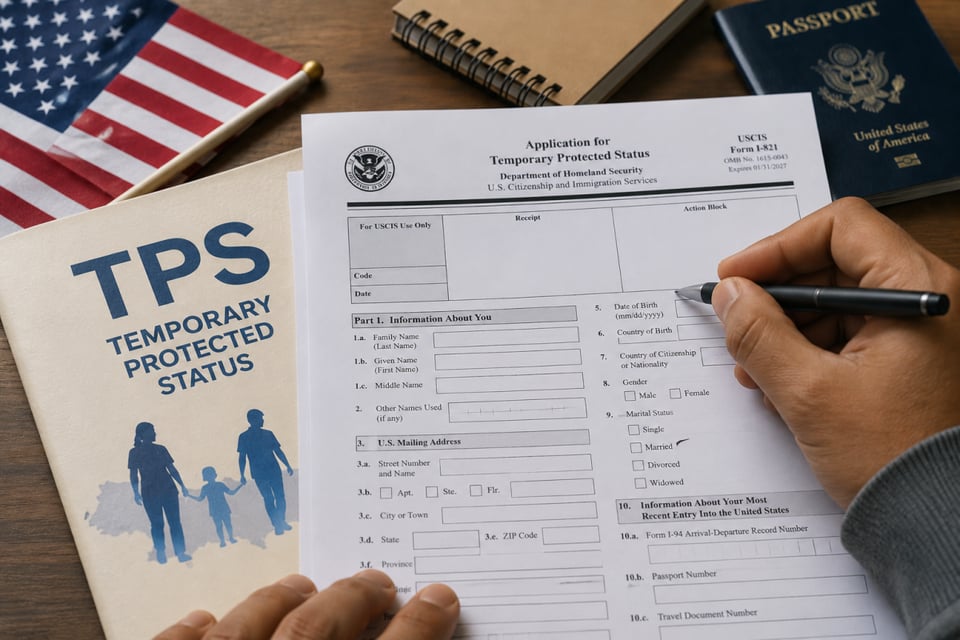
TPS expires on September 9 Over 170,000 affected Some arrived as children The upcoming September 9 may change the lives of over 170,000 Salvadorans…


Publicado el02/09/2026 a las 13:17
- TPS for Salvadorans expires September 9
- More than 170,000 people affected
- Some beneficiaries arrived as children
The approaching September 9 deadline could transform the lives of more than 170,000 Salvadorans protected by Temporary Protected Status (TPS) in the United States.
When the protection expires, many could lose their work authorization and face immigration consequences after spending decades building their lives in the country.
Behind that figure is a particularly difficult reality: Some beneficiaries arrived as children, attended school in the United States, purchased homes, and started families here.
That is the case for Alma, a 30-year-old Salvadoran living in Missouri who says she has virtually no memories of the country she may have to return to.
End of TPS Affects Salvadorans Who Built Lives in U.S.
“I’ve practically been in the United States my entire life: I grew up here, went to school, bought my house, and I’m building a career,” Alma told EFE.
The Salvadoran woman arrived in the United States when she was only 18 months old and received TPS protection at age five after her mother applied for the benefit for both of them.
“I grew up with TPS,” Alma said, describing an experience shared by beneficiaries who have spent most of their lives renewing a protection originally intended to be temporary.
One of her earliest immigration-related memories comes from childhood: “Once, immigration officers put me on a chair to take my fingerprints. I thought it was a game. Now, as an adult, I know they were collecting my biometric data,” she recalled.
For Some Salvadorans, “Returning” Means Going Somewhere They Barely Know
TPS for Salvadorans dates back to 2001 and has allowed beneficiaries to remain and work legally in the United States while protected by the program.
The scheduled expiration on September 9 makes the situation particularly difficult for people who have spent years building careers, families, and assets in the United States.
Alma summarized the contradiction with two questions: “I grew up with an American life and American values. Why do they want to remove us?” She added, “As a child, I didn’t have the opportunity to choose where to build my life.”
Her greatest fear is not only losing her job or home but also having to live in a country she does not recognize as the place where she built her adult life.
“When people tell me to ‘return’ to El Salvador, for me, it isn’t returning to a life because I didn’t live there. Thinking about it is very difficult,” she said.
Employers Prepare to Lose Workers
The effects are not limited to individual households. Alma works for a Missouri company where she advanced to a supervisory position and says other employees could also be affected.
According to her account, the company is preparing to lose “very hardworking people,” including employees who have held their positions since 2001.
“It hurts to see how life will continue and they will be replaced, while those affected—TPS beneficiaries—will leave with nothing,” she reflected.
The situation reveals another consequence of the expiration: In addition to the immigration decisions families must confront, some employers will face losing workers with years of experience.
For Alma, seeking political support is difficult because she lives in Missouri, a Republican state where federal representatives have supported policies ending temporary immigration protections.
U.S. Families Also Face Uncertainty
Ver este video en su propia página →
José Palma, coordinator of the TPS Alliance, understands this uncertainty and says he has already begun changing personal plans in anticipation of possibly losing his work authorization.
Palma, 48 and the father of four U.S. citizens, told EFE that he has placed several projects on hold, including construction work on his home.
He has also begun reducing expenses and saving money while waiting to see what happens after his immigration protection expires.
He hopes Congress will find a way to allow people who have lived under TPS for decades to remain legally in the country.
After 25 Years, TPS Beneficiaries Demand Permanent Solution
For Palma, one of the main problems is that after approximately 25 years, beneficiaries remain dependent on decisions to extend or terminate a temporary status.
“We would have applied for it a long time ago. Who wants to live without knowing what will happen to their future?” the activist said about pursuing a permanent solution if one had been available.
The uncertainty affects even basic decisions such as keeping a job, paying a mortgage, continuing an education, or determining what will happen to families that include U.S. citizens and TPS beneficiaries.
For Alma, the uncertainty also has a family dimension: Her mother died without obtaining the path to permanent residency she had hoped for.
She now faces the September 9 deadline with a question shared by other Salvadorans who arrived as children: What does it mean to return when the United States is, in practice, the only home they remember?
You May Be Interested In: Trump Proposes New Passport Requirements for U.S.-Born Children
SOURCE: EFE / El Diario NY