U.S. Coasts Are Sinking as Sea Levels Rise: A Silent and Urgent Crisis


Posted on05/27/25 at 10:20
- Sea Level Rise Intensifies
- Land Subsidence Accelerates Flooding
- Properties Face Growing Risk
According to USA TODAY, a silent threat is advancing along the coasts of the United States.
It’s not just sea level rise—but also the progressive sinking of the land. Together, these two forces could have devastating consequences in the coming decades.
The National Oceanic and Atmospheric Administration (NOAA) warns that by 2050, sea levels along the US coasts could rise between 8 and 23 inches (20–58 centimeters).
This projection represents a direct risk to millions of homes, critical infrastructure, and entire communities that could be submerged.
The Double Impact of Rising Sea Levels: Water and Subsidence
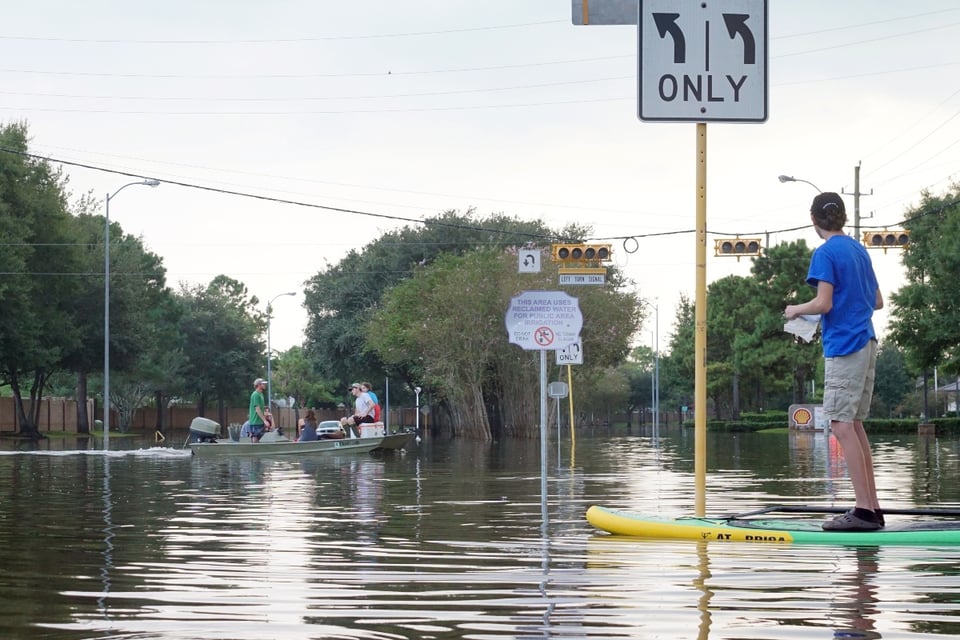
But the situation is even more serious because many of these coastal regions are losing elevation.
The phenomenon of land sinking, known as subsidence, is accelerating the impact of climate change and worsening flooding in vulnerable areas.
Cities like New York, Boston, Charleston, Atlantic City, and Norfolk have already recorded sea level increases of over 12 inches (30 centimeters) in the past century.
In Galveston, Texas, the figure reaches nearly 25 inches (63 centimeters).
Thermal Expansion and Global Ice Melt

This rise is partially due to oceans absorbing more heat as the atmosphere warms, causing the water to expand.
Additionally, glaciers and ice sheets in Greenland and Antarctica are melting rapidly, injecting millions of gallons of water into the oceans.
A recent study published on May 20 revealed that this melting is occurring even faster than previous models predicted.
Though each additional centimeter of sea level rise may seem minor, its impact on land is disproportionate.
Property Risk from Rising Sea Levels
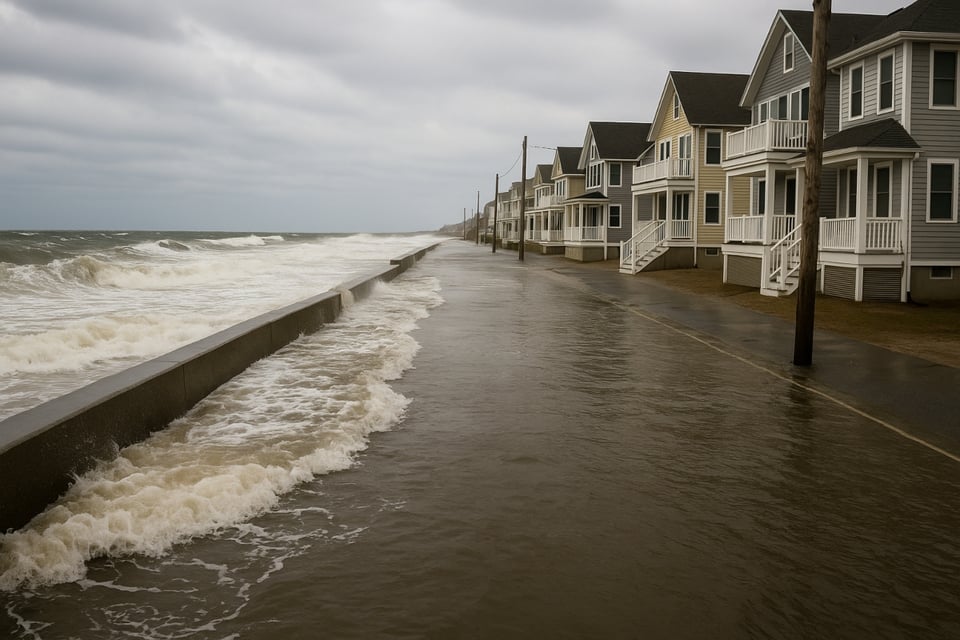
Each added centimeter of saltwater can push hundreds of meters inland, endangering more properties and human lives.
The problem extends to inland areas as well.
Cities far from the ocean, like Philadelphia, experienced a worrying increase in so-called “sunny day floods” in 2023—with 17 such events reported that year alone.
According to the organization Climate Central, up to 64,000 buildings and 637,000 properties could be at least partially below high tide level by 2050.
Urban Subsidence Worsens Coastal Flooding
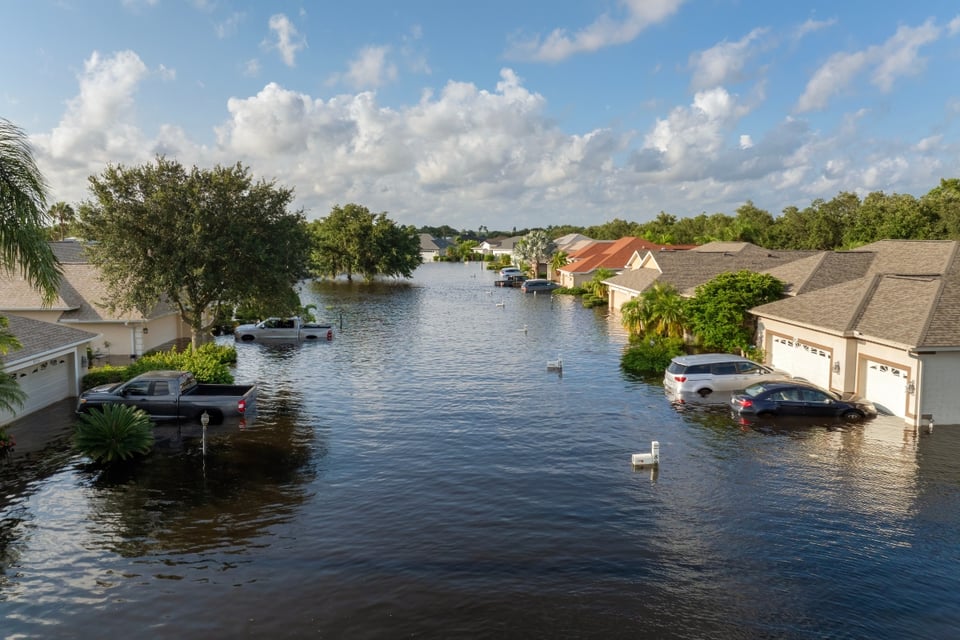
Of these, more than 48,000 could be fully submerged during high tides.
The states most at risk are Louisiana, Florida, and Texas.
Adding to this scenario is land subsidence, mainly caused by massive groundwater extraction.
A study published on May 8 shows that this phenomenon affects all 28 of the country’s most populated cities.
Sea-Level Flooding Without Storms
In at least 25 of those cities, over 65% of the urban area is sinking.
Houston tops the list, with more than 40% of its land experiencing subsidence at a rate greater than 5 millimeters per year.
In some places, the sinking is happening at twice that speed.
Professor Jennifer Walker of Rowan University warns that overexploitation of aquifers is draining groundwater levels, compacting soil, and dramatically increasing flood risk.
From High Tides to Coastal Crisis
Unlike storm surges, which are linked to strong storms, these new threats are quieter.
They are “nuisance floods,” also known as “sunny day floods,” which occur even without rainfall.
These floods appear during unusually high tides, often amplified by full moons, persistent winds, or shifting currents.
They impact streets, businesses, schools, and hospitals.
NOAA Sea-Level Projections
They cause road closures and transportation delays.
And worst of all: they are becoming more frequent.
NOAA estimates that by 2050, the US could face between 45 and 85 high-tide flood days annually.
“There’s no longer a need for extreme weather to trigger disruptive flooding along the coast,” said Nicole LeBoeuf, director of NOAA’s National Ocean Service.